Just finished our gokyo lake trek with MWT
Samuel James
Canada

Discover the turquoise Gokyo Lakes and Ngozumpa Glacier, then enjoy panoramic views of Everest and the surrounding Himalayas from Gokyo Ri.
The Gokyo Lake Trek is a 13-day adventure in Nepal, including 10 days of trekking through the Khumbu region. Rather than continuing to Everest Base Camp, this route branches off at Namche Bazaar into the Gokyo Valley, away from the main Base Camp trail, reaching the emerald-blue Gokyo Lakes (4,790 m / 15,715 ft) and Gokyo Ri (5,357 m / 17,575 ft). Along the way, you’ll walk through Sherpa villages, alpine terrain, and beside the Ngozumpa Glacier, the longest glacier in the Himalayas.
Not everyone who comes to the Khumbu has Everest Base Camp as their main goal. Some trekkers want fewer people on the trail and more time to simply take in the surroundings instead of moving from one destination to the next. In my experience planning this trek, most people who ask about Gokyo already know that’s what they’re looking for. Once you leave Namche behind, the villages become smaller, the teahouses quieter, and the trail takes on a very different pace from the main Everest Base Camp route.
A morning flight from Kathmandu to Lukla starts the trek, followed by the walk through Phakding and Namche Bazaar. Beyond Namche, the route leaves the main Everest trail and climbs through Dole and Machhermo into the Gokyo Valley. As you gain altitude, forests give way to open hillsides, glacial streams, and rocky ground, with the Ngozumpa Glacier stretching alongside the final approach to Gokyo.
Most trekkers set out before sunrise for Gokyo Ri. I always encourage first-time trekkers to start early, when clear morning conditions often provide the best views. On a clear day, you’ll see Everest, Lhotse, Makalu, Cho Oyu, the Gokyo Lakes, and the Ngozumpa Glacier from a single viewpoint. After spending time around the lakes, the trail returns through the same valley to Lukla, offering another chance to enjoy a quieter side of the Khumbu.
The trek takes place inside Sagarmatha National Park, so you’ll need a Sagarmatha National Park Entry Permit and a Khumbu Pasang Lhamu Rural Municipality Entry Permit. We arrange both permits before your trek, and no climbing permit is required.
One thing first-time trekkers don’t always expect is how much the altitude changes the pace of the walk. The trail itself isn’t technically difficult, but you’ll spend several days above 4,000 metres, and that naturally slows the journey. That’s why our itinerary includes an acclimatisation day in Namche Bazaar before continuing higher into the valley.
Most days settle into a 5 to 7-hour walking rhythm, aside from the early start for Gokyo Ri. In my experience, the trekkers who enjoy this route the most aren’t racing to the lakes. They’re the ones who pause beside the glacier, spend a little longer around the water, and let the valley unfold at its own pace.
Ready to go?
Download Day-by-Day Itinerary
When I recommend the Gokyo Lake Trek, it isn’t because it’s easier than Everest Base Camp or because it takes fewer days. I recommend it because it offers a different way to experience the Khumbu. The days around Gokyo feel quieter, the mountains look different from every turn in the trail, and you have time to sit beside the lakes instead of simply moving from one overnight stop to the next. We’ve designed this itinerary with a steady pace because the best parts of Gokyo aren’t something you rush through. If your idea of a good trek is spending more time in the mountains than in a crowd, this is the route I’d choose.
Total Distance
Walking Days
Accommodation
Meals
Transportation
Group Size
Guide
Porter
Best Season
Fitness Level
Permit
Trip Style
Starts
Ends
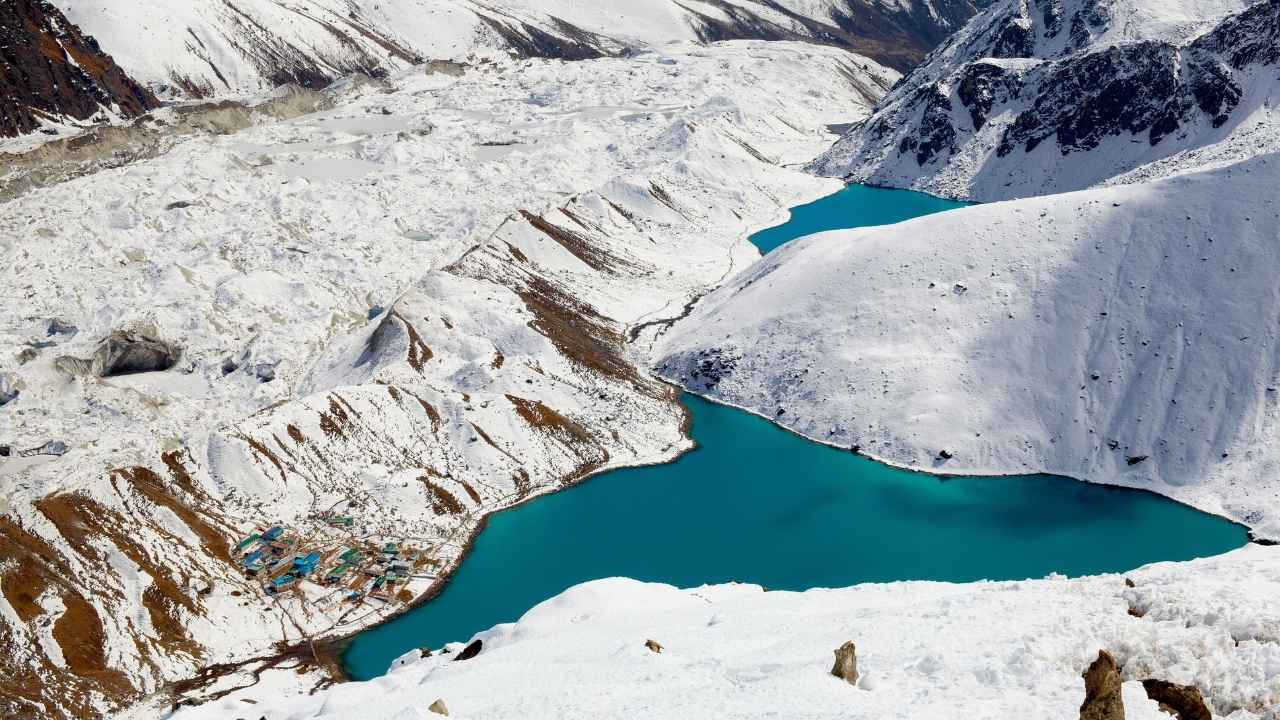
Choose the Gokyo Lakes Trek if you want to see turquoise lakes, Ngozumpa Glacier, and the high mountains of the Everest region. You walk through Sherpa villages, reach the Gokyo Lakes, pass the glacier, and climb Gokyo Ri for views of Everest, Cho Oyu, Makalu, Lhotse, and the surrounding peaks.
The Gokyo Lakes lie across the valley at high altitude. Their blue-green water is surrounded by rocky slopes, snow, and glaciers.
From Gokyo Ri, you can see across the Everest region. Everest, Lhotse, Makalu, Cho Oyu, and other high peaks can be seen from the top.
The trail passes close to the Ngozumpa Glacier, the longest glacier in Nepal. From the valley, you can see the glacier stretching between the mountains toward the higher passes.
After Namche, the route follows the Dudh Koshi toward Gokyo through smaller Sherpa settlements. This part of the trek is generally quieter than the main Everest Base Camp route, especially around Gokyo.
Choose Mountain World Treks for the Gokyo Lakes Trek because you will be trekking with experienced guides who know the Everest region well. We keep groups small, pay close attention to altitude, and stay involved throughout the trek. Our guides check how you are doing each day and adjust the pace, rest, or plan when the weather, trail, or altitude calls for it.
Started as a Trekking Porter
Became a Licensed Guide
Founded Mountain World Treks
Still Actively Guiding Treks in Nepal
Years from Porter to Founder
Our guides have spent years walking the trails of the Everest region. They know the route, villages, tea houses, and trail conditions along the way.
Saligram personally trains our guides and passes on the practical knowledge and standards he has built through decades in the Himalayas.
The trek reaches above 4,700 metres. Our guides monitor how you are doing, carry a pulse oximeter and first-aid kit, and adjust the pace when needed.
We normally keep our groups between 1-12 trekkers. This makes it easier to maintain an easy pace & give everyone enough time when needed.
Ask us anything before you book. We will explain the walking days, altitude, tea houses, weather, and harder sections so you know what to expect.
Our porters carry your bags through the same mountains you walk through. We provide fair pay, reasonable loads, and medical support along the way.

This is the exact 13-day itinerary I follow on every Gokyo Lakes trek I run. Starting in Kathmandu, we fly to Lukla and trek through Namche Bazaar, Dole, and Machermo to reach Gokyo, with a dedicated hike to Gokyo Ri before retracing the trail back to Namche Bazaar, Lukla, and Kathmandu. Below, you’ll find the daily itinerary, overnight elevations, walking times, and practical advice based on my years leading treks in the Khumbu region.
Travel insurance is not included in the package. Before your trek, you must purchase a policy that covers high-altitude trekking (up to at least 5,500 m) and emergency helicopter evacuation. Guests often add the optional Gokyo Ri hike (5,357 m) during the two nights at Gokyo, so it's worth setting the coverage threshold above that even though it isn't a fixed line item in the itinerary.
If you want to reach Everest Base Camp on foot and spend time in the Khumbu along the way, this trek may suit you. You don't need previous high-altitude trekking experience. You should be prepared for several hours of walking each day, consecutive trekking days...
Moderate to challenging. The Gokyo Valley Trek is a steady mountain walk with long uphill sections and a few steep climbs. The route gets harder as you reach the upper valley, with Gokyo Ri being the toughest part if you choose to climb it.
What Makes the Trek Challenging?
For more detail on the route, altitude, and preparation, see our Gokyo Lake Trek Difficulty Guide.
You do not need to be an athlete. You should be comfortable walking for several hours, going uphill and downhill, and walking on uneven ground. Regular walking and some hill training before the trek will make the longer walking days easier.
You’re Ready for the Gokyo Lakes Trek If You-
For a detailed training plan and altitude preparation, see our Complete Trek Fitness & Training Guide.
Generally, spring and autumn are the best seasons for the Gokyo Lakes Trek. March to May brings warmer days, rhododendrons in bloom in the lower valleys, and mostly settled weather as you walk higher. From late September to November, the air is usually clearer, and the mountains stand out well. Winter is cold but peaceful, while the monsoon months can bring cloud, rain, and changes to the Lukla flights.
Spring brings warmer weather to the trail and flowers to the forests below Namche. As you move toward Gokyo, the mornings are often clear, although afternoon clouds can appear. April and May are also busy months on the trail.
These are the monsoon months in Nepal. Rain is more common on the lower sections, while cloud can cover the mountains and change the views from day to day. Lukla flights can also be affected by poor weather. You will meet fewer trekkers on the route.
Late September usually brings more settled weather back to the trail. October is a favorite month for Gokyo because of clear mornings and strong mountain views. By November, the mornings and nights become noticeably colder, but the skies can remain clear
Winter is cold in Gokyo, particularly after sunset and before sunrise. Snow can cover parts of the higher trail, but the route is quieter and clear mornings can give very sharp views of the surrounding peaks. If you prefer fewer people and do not mind the cold, winter can be a good choice.
Not sure whether to choose Gokyo lakes or Everest Base Camp? Compare the main differences side by side to see which trek suits you better.
| Feature | Gokyo Lakes Trek | 13 Days, Cost Itinerary and Best Time | Everest Base Camp Trek | 14 Days itinerary, Cost & Best Time |
|---|---|---|
| Duration | 13 Days Days | 14 Days Days |
| Highest Point | Gokyo Ri – 5,357 m | Kala Patthar – 5,545 m |
| Difficulty | Moderate to challenging | Challenging |
| Best For | Exploring Gokyo Lakes, walking beside Ngozumpa Glacier & climbing Gokyo Ri | Standing at Everest Base Camp, experiencing Sherpa culture & high mountain views |
| Mountain Highlights | Cho Oyu, Everest, Makalu & surrounding peaks | Everest, Lhotse, Nuptse & Ama Dablam |
| Landscape | Gokyo Lakes, Ngozumpa Glacier, valleys & high mountain trails | High valleys, glaciers, villages & rugged mountain terrain |
| Culture | Sherpa villages & Tibetan Buddhist culture | Sherpa villages & Tibetan Buddhist culture |
| Crowds | Lower | Higher |
| Trek Experience | Quieter route with lakes, glacier views & Gokyo Ri | Classic Everest route with Base Camp, Kala Patthar & more busy trails |
The Gokyo Lakes Trek is a high-altitude trek through the Khumbu, with long walking days, steep climbs, and an ascent to Gokyo Ri at 5,357 m. These guides cover what you need to arrange before and during the trek, from training and insurance to weather, flights, permits, costs, altitude, and trekking with family or on your own.
Start with regular walking and gradually add hills, stairs, and longer uphill hikes. You should be comfortable walking for several hours and handling consecutive days on the trail. Squats, lunges, step-ups, and core exercises can help build the leg strength needed for the climbs. The higher sections also demand good endurance, so increase your walking distance and elevation gradually before the trek. Our Fitness and Training Guide gives you a week-by-week plan and explains which exercises to focus on.
The Gokyo Lakes Trek follows a quieter route through the Khumbu than the main Everest Base Camp trail. From Lukla, you walk through Phakding and Namche Bazaar, then turn towards Dole and Machhermo before reaching Gokyo Village at 4,790 m. From Gokyo, the trail leads to the Gokyo Lakes and up Gokyo Ri, with views of Everest, Lhotse, Makalu, and Cho Oyu on a clear day. The route then descends through the Khumbu and returns to Lukla. The Gokyo Lakes Trek guide covers the day-by-day itinerary, best time to go, trek difficulty, altitude and acclimatization, food and accommodation, trekking gear, permits, Lukla flights, and costs.
Samuel James
Canada
Sue Johnson
United Kingdom
Tiger
Manchester, United Kingdom

Registered tourism company

Trekking Agencies Association

Authorised tour operator

Nepal Mountaineering Association
Certificate of excellence

International travelers
Gokyo Lakes Trek | 13 Days, Cost Itinerary and Best Time . 13 Days