
Climbing
Peak Climbing in Nepal
Go higher than the usual trekking routes, lace up your climbing boots, strap on your crampons, take on the snow and ice, and summit your first peak in the Himalayas.
TREKKING PEAKS
Mountain Climbing in Nepal
Mountain Climbing in Nepal
Nepal has climbing options from 6,000 m trekking peaks to 8,000 m expeditions. The main areas include Everest, Annapurna, Langtang, Manaslu and Makalu, with big differences in terrain, altitude and climbing skills.
Island Peak, Mera Peak, Lobuche East and Yala Peak are good starting points if you are moving from trekking into mountaineering. Depending on the peak and season, you may need crampons, an ice axe, ropes, a harness and basic skills on snow and ice.
Ama Dablam, Manaslu, Dhaulagiri, Makalu and Everest are a different level. These climbs need previous high-altitude or climbing experience, more acclimatization and stronger preparation. Glaciers, steep sections, high camps, weather and long periods above 5,000 m can make a big difference on the mountain.
Spring and autumn are the main climbing seasons for many peaks, but the best time varies by mountain. Before the climb, we look at the route, weather, permits, equipment and acclimatization schedule rather than treating every peak the same way.
If you are new to mountaineering, tell us what trekking or climbing you have done before. We can then suggest a peak that fits your experience and explain what you will need before you head into the mountains.

Climbing in Nepal
Why Nepal Is Made for Climbing
Why Nepal Is Made for Climbing
Climbing in Nepal takes you beyond the main trekking trails and into higher mountain terrain. The approach to a peak may pass through villages, forests and alpine valleys before reaching glaciers, snow slopes, rocky sections and high camps.
Island Peak, Mera Peak, Lobuche East and Yala Peak are often chosen by trekkers moving into mountaineering. Ama Dablam, Manaslu, Dhaulagiri, Makalu and Everest require more climbing experience and a much longer preparation period.
Each mountain has its own route and demands. One may involve glacier travel and fixed ropes, while another has steep snow, rock sections or a long summit day. Snow, wind and visibility can also change the route, particularly at higher elevations.
You can build your climbing experience in Nepal over several trips. A trekking peak can teach you how to use crampons, an ice axe, ropes and a harness, as well as what it is like to sleep at high camps. With more experience, you can take on a harder and more technical mountain.
8,848.86 m
8,848m
Height of Everest — the roof of the world, waiting to be seen.
Walk Into the Climbing Zone
Many climbs begin on established trekking trails. You spend the first part of the journey walking through villages and valleys before the trail gives way to snow, ice and higher camps.
Pick a Peak That Suits You
Mera Peak, Island Peak, Lobuche East and Yala Peak each have different routes and demands. Higher technical mountains require stronger climbing skills and previous experience.
Learn the Skills Along the Way
Climbing requires skills that are not normally needed on a trek. Depending on the mountain, you may use crampons, an ice axe, ropes and a harness on snow, ice and fixed lines.
Experience Life at High Camps
Once you leave the lower valleys, the nights become colder and the air thinner. High camps are basic, and rest, food and acclimatization become important parts of the climb.
Climb With People Who Know the Route
Our guides and climbing Sherpas know the routes, camps and conditions from working on these mountains. They help with practical decisions from the approach to the descent.
OUR CLIMBING PACKAGES
Choose Your Peak
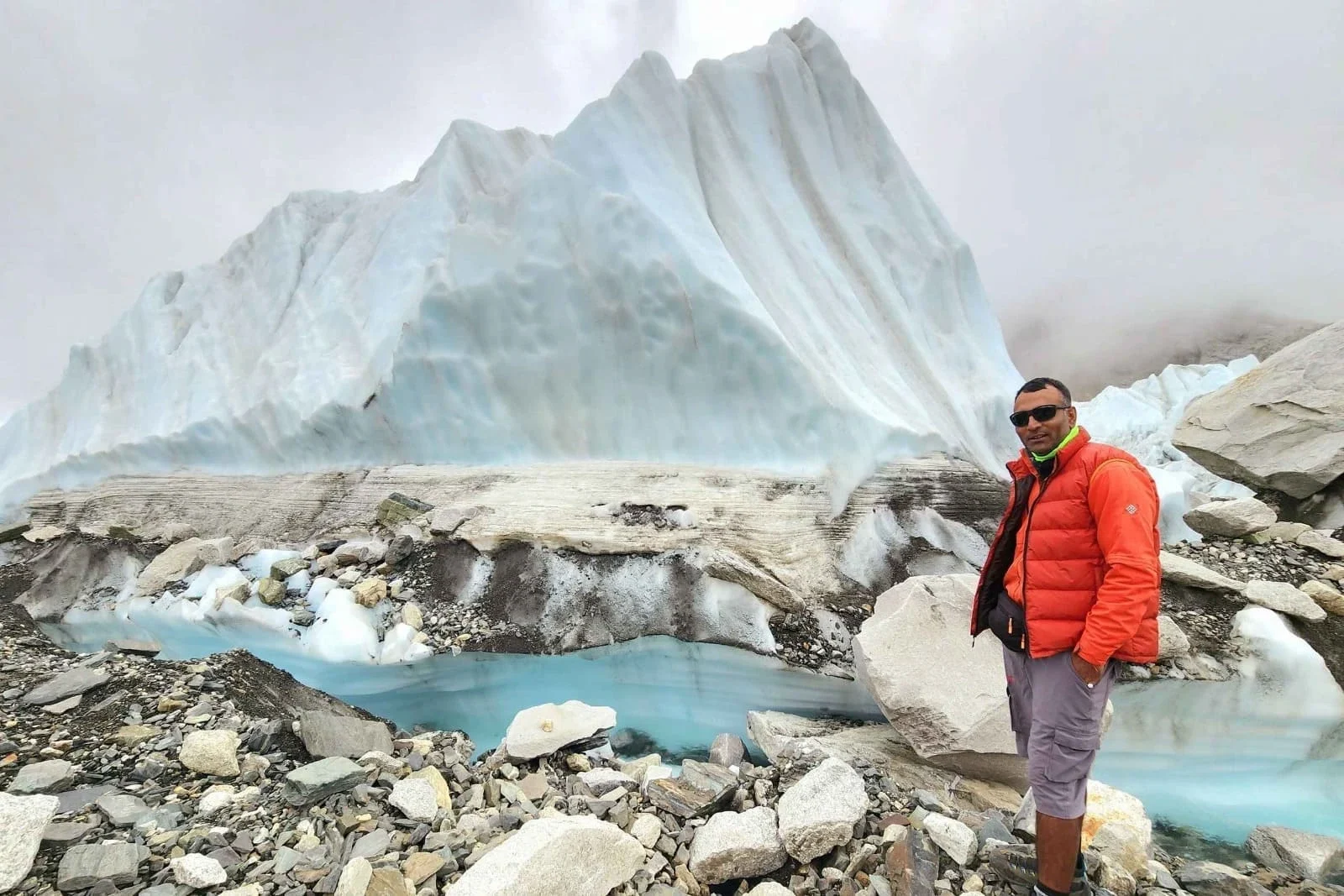
30+
Years of Himalayan Experience
Meet Your Guide
Saligram Aryal
Founder · Lead Himalayan Guide · 30+ Years of Experience (Porter to Founder)
I was fourteen when I carried my first load as a porter in the Annapurna region. I earned eighty rupees a day and carried thirty-five kilos on my back. On that first trek, a client gave me a hundred-dollar tip. I had never seen that much money before, and it made me think I could build my life in these mountains.
I could not speak English then, so I bought some old English books and practiced in front of a mirror every day. In 2000, I became a licensed guide, and in 2010, I started Mountain World Treks & Expedition.
Difficulty Guide
Which level suits you?
Every trek is rated by our guides based on daily hours, altitude gain, and terrain.
★★★★★
Memorable trek
S
Saligram
Mardi Himal Trek | Itinerary, Cost & Difficulty 2026/27
★★★★★
Good experience with Mountain World
S
Saligram
Everest Base Camp Trek with Helicopter Return |12 Days Plan
★★★★★
Best EBC experience-Apr
S
Saligram
Everest Base Camp Trek | 14 Days itinerary, Cost & Best Time
Begin Your Journey
Ready to Experience
Ready to Experience
Nepal?
Join over 3,000 trekkers who've trusted Mountain World Treks to guide their Himalayan adventure safely and unforgettably.
5,200+Happy Trekkers
15 YrsExperience
4.9 ★Average Rating
Our Registrations & Memberships

Government of Nepal
Registered tourism company

TAAN
Trekking Agencies Association

Nepal Tourism Board
Authorised tour operator

NMA
Nepal Mountaineering Association
TripAdvisor Excellence
Certificate of excellence

45+ Countries
International travelers