The Everest Base Camp Trek is a moderate to challenging high-altitude trek. It is not technically difficult, and most reasonably fit people can complete it with proper preparation. The real challenge is spending several days at high altitude, walking for hours on uneven ground, recovering in cold conditions, and dealing with the reduced oxygen above 4,000 metres. The climb to Kala Patthar at 5,545 metres is the hardest single effort on the standard route.
You do not need ropes, climbing skills, or previous mountaineering experience. You need enough stamina to walk several hours a day for many consecutive days, and you need to give your body time to adjust as you gain altitude.
I’ve guided this trail since 2002. Before that, I worked as a porter, so I know the route from a different side too. One question comes up before almost every departure: “How hard is it really?” People want to know whether the walking is difficult, how much training they need, and which days will test them most.
Everest Base Camp Trek Difficulty at a Glance
| Factor |
What to Expect |
| Overall difficulty |
Moderate to challenging |
| Trek duration |
14 days, including acclimatization and travel days |
| Walking per day |
Usually, 4 to 7 hours |
| Starting point |
Lukla, 2,860 m |
| Everest Base Camp |
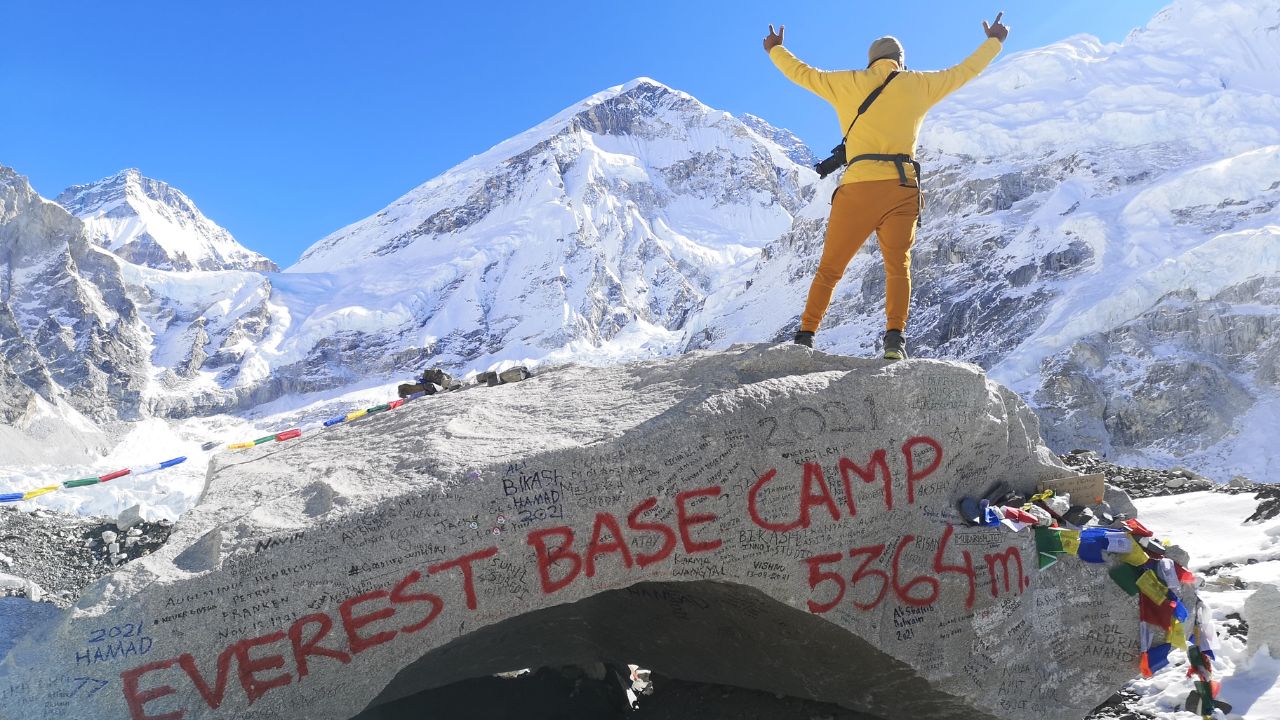
5,364 m |
| Highest point |
Kala Patthar, 5,545 m |
| Teahouse comfort |
Basic, especially above Dingboche |
| Main challenge |
Altitude and accumulated fatigue |
| Technical climbing |
None on the standard route |
The numbers give you a useful starting point, but they do not explain what the trek actually feels like. Six hours of walking at home and six hours of walking near Gorak Shep are very different. At altitude, there is less oxygen available, so a climb that would feel easy at lower elevation can require several stops.
Your normal walking speed also becomes less useful as you go higher. The pace that feels comfortable in Kathmandu may be far too fast around Dingboche or Lobuche.
Everest Base Camp Trek Difficulty Rating: 7/10 Based on Saligram's Experience
I would rate the standard Everest Base Camp Trek around 7 out of 10 for a trekker who has prepared properly but has not previously trekked in the Himalayas.
That rating is not based only on the distance. It takes into account altitude, consecutive walking days, terrain, cold, sleep, and the mental side of moving slowly for long periods.
| Factor |
Rating |
What I’ve Seen |
| Altitude |
8/10 |
Altitude is the one thing training cannot completely prepare you for. I’ve watched very fit runners struggle around Dingboche while less experienced walkers managed well by keeping a steady pace. |
| Walking effort |
7/10 |
You usually walk 4 to 7 hours a day, and the tiredness builds over several days. |
| Terrain |
6/10 |
There is no technical climbing, but stone steps, rocky paths, loose ground and long descents work your legs hard. |
| Cold and teahouse comfort |
6/10 |
Nights become much colder above Dingboche, and Gorak Shep is particularly basic and cold. |
| Mental effort |
7/10 |
Walking slowly for hours can be frustrating, especially for people who are used to moving quickly. |
| Lukla flight logistics |
6/10 |
Weather can delay or cancel flights, so the uncertainty adds another part to the trip. |
| Technical climbing |
1/10 |
The standard route is trail walking. You do not need ropes or technical climbing equipment. |
| Overall |
7/10 |
Demanding, but achievable with preparation and a sensible pace. |
Why Is the Everest Base Camp Trek Difficult?
The standard Everest Base Camp route does not have technical climbing, but several things make the trek physically demanding.
Altitude is the biggest factor. As you climb higher, atmospheric pressure falls and less oxygen is available to your body. Above 4,000 metres, even a gradual uphill section can leave you breathing heavily. Your walking speed has to change with the altitude.
The walking days add up. There is rarely one enormous day followed by several easy ones. You spend many days on your feet, and the tiredness from one day can still be there when you start the next morning.
The ground is uneven. The trail includes stone steps, rocky sections, suspension bridges, steep climbs, descents and loose ground. None of this requires climbing skills, but your knees, ankles and thighs keep working throughout the day.
Cold affects recovery. Higher teahouses are simple, and bedrooms are often unheated. Sleep can become less comfortable as the temperature drops, especially around Gorak Shep.
There is also the uncertainty of the Lukla flight. Weather can change the flight schedule, which is why I always advise trekkers to leave some extra days before an international flight home.
Everest Base Camp Trek Elevation Profile
The route climbs from Lukla at 2,860 metres to Kala Patthar at 5,545 metres. The biggest elevation gain comes after Namche Bazaar.
| Place |
Elevation |
| Lukla |
2,860 m / 9,383 ft |
| Phakding |
2,610 m / 8,563 ft |
| Namche Bazaar |
3,440 m / 11,286 ft |
| Tengboche |
3,860 m / 12,664 ft |
| Deboche |
3,820 m / 12,533 ft |
| Dingboche |
4,410 m / 14,468 ft |
| Lobuche |
4,940 m / 16,207 ft |
| Gorak Shep |
5,164 m / 16,942 ft |
| Everest Base Camp |
5,364 m / 17,598 ft |
| Kala Patthar |
5,545 m / 18,192 ft |
From Lukla to Kala Patthar, the total elevation difference is almost 2,700 metres. You do not gain all of that in one climb. The itinerary spreads the ascent over several days and includes acclimatization stops.
That gradual approach is one of the most important parts of a sensible EBC itinerary.
Everest Base Camp Trek Difficulty by Route Section
The difficulty changes as you move farther into the Khumbu. The early days are generally easier physically, while altitude becomes a much bigger factor after Dingboche.
| Route Section |
Difficulty |
Key Point |
| Lukla – Phakding |
Easy |
Short opening day. Start slowly and settle into the walking routine. |
| Phakding – Namche |
Moderate–Strenuous |
Long climb after Jorsale. Save your legs early. |
| Namche Acclimatization |
Moderate |
Hike higher, sleep at the same altitude. Do not skip it. |
| Namche – Tengboche |
Moderate |
Several climbs and descents. Keep a steady pace. |
| Tengboche – Dingboche |
Moderate |
Thinner air becomes noticeable. Eat, drink and slow down. |
| Dingboche Acclimatization |
Moderate |
Higher-altitude hike. Take the acclimatization day seriously. |
| Dingboche – Lobuche |
Strenuous |
Above 4,000 m with accumulated fatigue. Slow your pace. |
| Lobuche – Gorak Shep – EBC |
Very Strenuous |
High altitude and rocky ground. Remember you must walk back. |
| Kala Patthar |
Hardest |
Steep pre-dawn climb at 5,545 m. Small steps work best. |
| Pheriche – Namche |
Moderate |
Long descent on tired legs. Trekking poles can help. |
| Namche – Lukla |
Moderate |
Long final day. Save energy for the last few hours. |
How Altitude Changes the Difficulty
The biggest change on the Everest Base Camp Trek happens after Namche. The trail itself does not suddenly become technical, but the thinner air means you walk more slowly and need more time to recover.
At Lukla and Phakding, most trekkers feel close to normal. Around Namche Bazaar at 3,440 m, uphill walking becomes noticeably harder, and some people may experience a mild headache. By Tengboche, Deboche, and Dingboche, breathing takes more effort and changes in sleep or appetite become more common.
Above 4,400 m, around Dingboche and Lobuche, even a gentle slope can feel demanding. Once you reach Gorak Shep at 5,164 m, and continue to Everest Base Camp and Kala Patthar, altitude becomes the main difficulty. You may find yourself taking several short breaks on slopes that would feel easy at home.
This is why I don’t judge a trekker’s ability by fitness alone. I’ve seen very fit people slow down dramatically above 4,000 metres, while average walkers who kept a steady pace managed the same trail comfortably. Your pace needs to change as the altitude increases.
Is the Everest Base Camp Trek Right for You?
The Everest Base Camp Trek can suit a wide range of trekkers, provided they understand what they are signing up for.
| You are… |
Suitability |
What Changes for You |
| An active walker with no Himalayan experience |
Good with preparation |
Spend 2 to 3 months building walking and uphill endurance. |
| Gym-fit but not used to hiking |
Possible with adjustment |
Add real hills, stairs and longer walks to your training. |
| A complete beginner with no training |
Not advisable yet |
Train first rather than trying to rely on determination alone. |
| Over 50 or 60 and in good health |
Possible with appropriate preparation |
Age itself is not the deciding factor. Health, pace and preparation matter more. |
| A fast or competitive walker |
Possible, but needs discipline |
You will need to slow down as altitude increases. |
| A nervous first-time trekker |
Suitable with guide support |
A good guide can explain the route, pace and altitude changes each day. |
I’ve guided trekkers in their 60s who moved very steadily and completed the trek well. I’ve also seen younger, very fit people struggle because they tried to maintain the same pace they use at home.
Altitude on the Everest Base Camp Trek: What You Need to Know
Fitness can prepare your legs and lungs for walking, but it cannot guarantee how your body will respond to altitude. There is no training method that makes 5,000 metres feel like sea level.
This is why I pay more attention to how a trekker is behaving than to fitness claims made before the trek. Is the person eating? Sleeping? Walking normally? Developing a headache? Moving unusually slowly? These observations tell us a lot.
From Namche onward, our guides carry a pulse oximeter and first-aid kit. Oxygen saturation readings can be useful as one part of monitoring, but we do not use one number by itself to decide whether someone is safe to continue. Symptoms and how the person is changing matter too.
If you develop a headache, nausea, dizziness, unusual tiredness, difficulty walking normally, or other concerning symptoms, tell your guide. Do not hide symptoms because you are worried about slowing the group down.
The safest response to altitude problems is to take them seriously early.
Food, Hydration, and Appetite at High Altitude
Your appetite can change as you gain altitude. Food that you normally enjoy may suddenly seem less appealing, but your body still needs enough energy for several hours of walking.
Dal bhat remains one of the most practical meals on the trail. It is warm, filling and available in most teahouses. Soup, porridge, potatoes and other simple foods can also be useful when your appetite is low.
I generally recommend that trekkers eat regularly rather than waiting until they feel hungry. At higher elevations, you may not feel like eating enough after a long walking day.
Hydration matters too. Dry mountain air and physical activity increase your need for fluids. Many trekkers aim for around 3 to 4 litres of fluid a day, adjusting according to their needs and conditions.
Use treated, boiled or properly filtered water. Do not assume clear mountain water is safe to drink untreated.
Teahouses, Cold Nights, and Comfort on the Everest Base Camp Trek
The teahouses are simple family-run lodges. They are part of the experience, but they are not hotels.
The dining room is usually the warmest place in the lodge, especially when the stove is burning. This is where trekkers eat, talk, charge devices and spend the evening.
Bedrooms become much colder as you climb. Above Dingboche, heating in sleeping rooms is generally not available, and temperatures can fall sharply after sunset.
Gorak Shep is usually the most basic and coldest overnight stop. It is also the night before the early morning Kala Patthar climb, so poor sleep there is common.
A suitable sleeping bag, warm base layers, dry socks and a good down jacket make a noticeable difference. I also recommend keeping the clothes you need for the morning where you can reach them easily rather than searching through your bag in the cold.
Hot showers, charging and Wi-Fi may be available at many teahouses, but they usually cost extra and become more expensive as you go higher.
Lukla Flight Delays and Buffer Days for Everest Base Camp
The Lukla flight is weather-dependent. Even during the main trekking seasons, flights can be delayed or cancelled when conditions are unsuitable.
This is why I tell trekkers not to schedule an international flight immediately after returning to Kathmandu.
During busy periods, flights to and from the Everest region may operate through Ramechhap rather than Kathmandu. This can mean an early road journey before the flight.
My advice is simple: keep 2 to 3 extra days between the end of your trek and your international flight home whenever your schedule allows it.
If your return date is fixed and you have no room for delays, discuss that with us before booking. We can explain the available options, including alternative arrangements when necessary.
The flight issue has nothing to do with trekking fitness, but it is one of the most important practical points to understand before you start.
Everest Base Camp vs Annapurna Base Camp: Which Trek Is Harder?
The Everest Base Camp Trek is generally harder than the Annapurna Base Camp Trek because you spend much more time at high altitude.
| Factor |
Everest Base Camp |
Annapurna Base Camp |
| Highest point |
5,545 m at Kala Patthar |
About 4,130 m |
| Base Camp altitude |
5,364 m |
About 4,130 m |
| Typical duration |
14 days |
Around 10 days |
| Main challenge |
Altitude and accumulated fatigue |
Stone steps and repeated climbs and descents |
| Technical climbing |
None |
None |
| Overall difficulty |
Moderate to challenging |
Moderate |
The walking itself is not necessarily dramatically harder on every day of the EBC trek. The difference is what happens when you spend several days above 3,500 or 4,000 metres.
If altitude is your main concern, Annapurna Base Camp is generally the easier choice. If your main goal is to walk into the Khumbu and reach Everest Base Camp, the higher altitude is part of the challenge you are choosing.
The Mental Challenge of the Everest Base Camp Trek
The mental side of EBC is easy to underestimate.
The first few days can feel exciting because everything is new. Later, the walking becomes slower, the mornings become colder, and the distances can feel longer than they look on the itinerary.
Some trekkers find the slow pace particularly difficult. If you are used to walking quickly at home, it can be frustrating to spend much of the day moving at a pace that feels unusually slow.
My advice is to stop thinking about the entire remaining distance. Concentrate on the next village, the next rest stop, or the next meal.
You also need to accept that the mountain decides the pace. Trying to prove how fit you are does not help at 4,500 metres.
Tell your guide when something is bothering you. A headache, poor appetite, bad sleep, sore knees or unusual tiredness is useful information, not something you need to hide.
Can a Beginner Do the Everest Base Camp Trek?
Yes. A beginner can complete the Everest Base Camp Trek with proper preparation and a sensible itinerary.
You do not need previous Himalayan trekking experience. You do need enough stamina to walk for several hours on consecutive days, and you need to be comfortable with uneven ground, climbs and descents.
Previous trekking experience can help you understand your own pace and how your body responds to long days, but it does not guarantee that you will handle altitude better.
I’ve seen first-time trekkers do well because they listened to their guides, walked slowly and respected the acclimatization days. I’ve also seen experienced hikers struggle after assuming that their previous fitness would protect them from altitude.
How Fit Do You Need to Be for Everest Base Camp?
You do not need athlete-level fitness. You need good walking endurance, enough leg strength for climbs and descents, and the ability to keep moving for several hours a day.
A good target is to be comfortable with:
- 4 to 7 hours of walking
- Consecutive days of walking
- Uphill sections
- Long descents
- Uneven and rocky ground
- A daypack weighing around 5 to 8 kg
- Walking at a slower pace than you normally use at home
Running, cycling and gym workouts can help your general fitness, but they should not be your only preparation. The trail places a different demand on your legs, especially during long downhill sections.
How to Train for the Everest Base Camp Trek
Give yourself around 2 to 3 months of consistent preparation if possible.
Build Walking Endurance
Regular walking is the most useful starting point. Add hills and stairs as your fitness improves. As the trek approaches, work toward longer walks of around 4 to 6 hours.
You do not need to walk that long every day during training. One longer hike each week, combined with shorter regular sessions, is more realistic for most people.
Train for Uphill and Downhill Walking
The trail is not only about climbing. Long descents can put considerable stress on your knees and thighs.
Step-ups, squats and lunges can help strengthen your legs. More importantly, include real uphill and downhill walking when you can.
Carry a Daypack
Practice with the pack you expect to use in Nepal. Even a 5 to 8 kg daypack feels different from walking without weight.
You do not need to train with your full trekking luggage. Your porter can carry the main load.
Break in Your Boots
Do not arrive in Nepal with brand-new boots.
Wear your trekking boots on several real walks before the trip. Eight to ten hikes is a useful target if the boots are new to you.
You want to discover rubbing, pressure points and other problems at home, not on the trail between Namche and Tengboche.
Practice a Slower Pace
This sounds simple, but it is one of the most useful things you can practise.
On some training walks, deliberately slow your pace and keep your breathing comfortable. Above Namche, you may need to walk much more slowly than you expect.
How to Make the Everest Base Camp Trek Easier
You cannot remove the altitude, but you can avoid many unnecessary problems.
- Choose an itinerary with proper acclimatization days.
- Give yourself 2 to 3 months to prepare.
- Build your training around real hills and longer walks.
- Keep your daypack light.
- Break in your boots before arriving in Nepal.
- Eat regularly even when your appetite drops.
- Drink enough treated or filtered water.
- Walk slowly at higher elevations.
- Tell your guide about symptoms early.
- Leave buffer days for possible Lukla flight delays.
- Do not turn the trek into a competition.
The purpose of preparation is not to make Everest Base Camp easy. It is to arrive strong enough that the altitude and long walking days remain manageable.
How Our Guides Manage Everest Base Camp Trek Difficulty
A guide cannot remove the altitude, but good planning can prevent many avoidable problems.
Our standard EBC itinerary includes acclimatization days at Namche Bazaar and Dingboche. We do not remove these days simply because a group feels strong during the first few days.
Our guides monitor trekkers throughout the route and carry pulse oximeters and first-aid kits. We pay attention to symptoms, appetite, sleep, walking pace and general condition rather than relying on one oxygen reading.
We normally arrange one porter for every two trekkers, which keeps the individual load manageable. Trekkers carry their daypack while the porter carries the main luggage.
Our office also handles permits and flight arrangements. If Lukla or Ramechhap flights are affected by weather, we help with the necessary changes. If an emergency requires evacuation, our office coordinates the response with the relevant operators and hospital.
Good support does not make the mountain lower. It means you are not dealing with every problem by yourself.
So, How Hard Is the Everest Base Camp Trek Really?
The Everest Base Camp Trek is demanding, but it is achievable for most reasonably fit people who prepare properly and respect the altitude.
The hardest part is not a technical climb. It is the combination of high altitude, several consecutive walking days, uneven ground, cold mornings, long descents and the slow pace required in the upper Khumbu.
You do not need to be the strongest person in the group. You need to be prepared, patient and willing to listen to your body.
Walk steadily. Take the acclimatization days seriously. Tell your guide when something does not feel right. Give yourself enough time to adjust.
I’ve seen many different kinds of trekkers reach Everest Base Camp. The people who do best are not always the youngest, fastest or fittest. They are usually the ones who understand that the mountain has its own pace and are willing to follow it.
Frequently Asked Questions
Is the Everest Base Camp Trek good for beginners?
Yes. Beginners can complete the trek if they are reasonably fit, train beforehand and follow a sensible itinerary with proper acclimatization. Previous Himalayan experience is not required.
What is the biggest reason trekkers turn back from Everest Base Camp?
Altitude is one of the main reasons, although illness, injury, exhaustion and weather can also change a trekker’s plans. Taking symptoms seriously and following a gradual ascent are important.
Is Everest Base Camp harder than Kilimanjaro?
They are difficult in different ways. Kilimanjaro has a shorter overall trekking period and a demanding summit push, while EBC involves many more consecutive walking days and a longer period at high altitude. Neither requires technical climbing on the standard route.
Can people in their 50s or 60s complete Everest Base Camp?
Yes. Age alone does not determine whether someone can complete the trek. General health, preparation, pacing and response to altitude matter much more.
I’ve guided trekkers in their 60s who completed the route comfortably by keeping their own steady pace rather than trying to match younger trekkers.
Do I need to be a runner or gym-goer to prepare?
No. Walking, hills, stairs and longer hikes are more directly useful for EBC. Gym and cardio training can support your fitness, but real walking should be part of your preparation.
Can I test my altitude tolerance before going to Nepal?
Not reliably. People respond differently to altitude, and there is no simple test that can tell you exactly how your body will respond at 5,000 metres.
That is why gradual acclimatization is so important.
Is Everest Base Camp harder in spring or autumn?
Neither season is automatically harder. Spring and autumn are both major trekking seasons, but conditions can vary from one year to another.
Spring generally brings warmer daytime conditions and rhododendron flowers, while autumn is known for clear mountain views. Later in autumn, mornings can become colder.
Is it normal to feel worse during an acclimatization day?
It can happen. What matters is how your symptoms develop.
If symptoms are getting stronger rather than improving, tell your guide. Do not assume that staying at the same sleeping altitude means you should simply push through worsening symptoms.
What is the coldest part of the Everest Base Camp Trek?
Gorak Shep is usually the coldest and most basic overnight stop. The early morning start for Kala Patthar can be particularly cold because you are leaving before sunrise at 5,000 metres.
Warm layers, a suitable sleeping bag, gloves, a hat and properly organised gear make those mornings easier.
Should I book my international flight immediately after the trek?
I recommend leaving 2 to 3 buffer days whenever possible. Lukla flights are weather-dependent, and delays can happen even during the main trekking seasons.
A little extra time at the end of your Nepal trip is much safer than arranging an international connection with no room for a delay.