Good experience with Mountain World
Andrew
Singapore
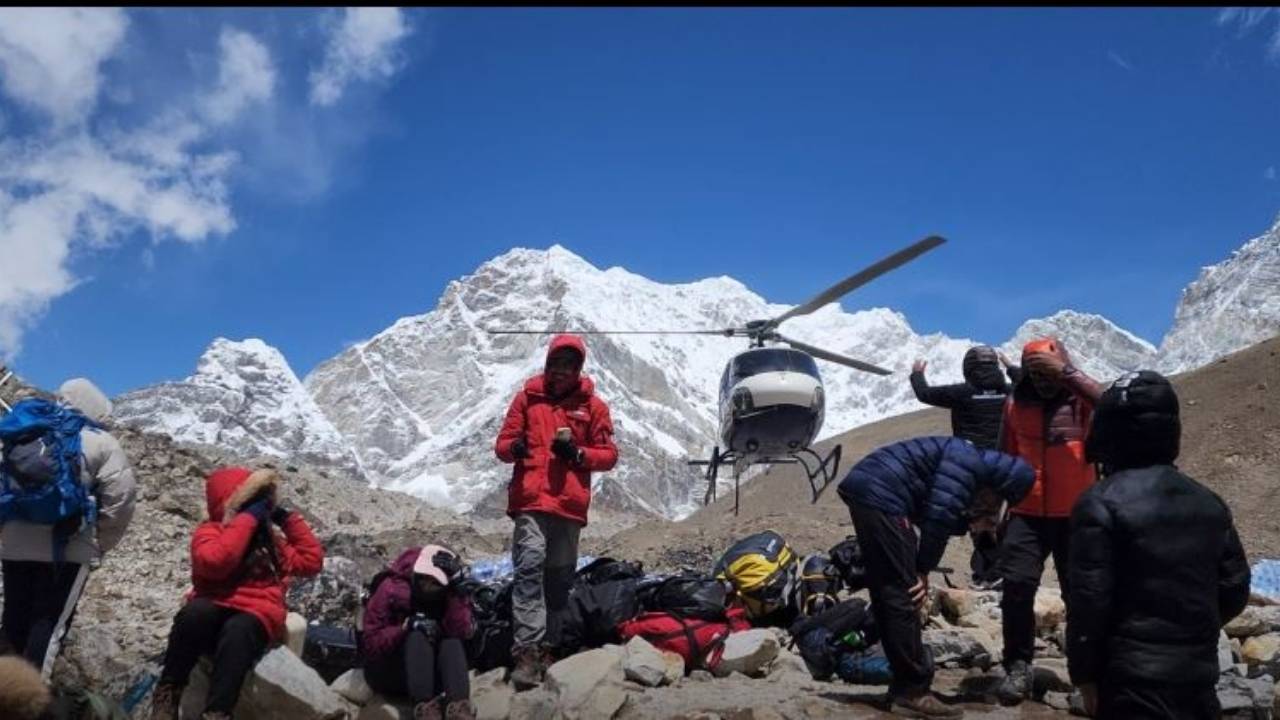
Trek to Everest Base Camp, then skip the long walk down. Fly back by helicopter from Gorak Shep to Lukla.
This 12-day Everest Base Camp trek with helicopter return follows the classic route to Base Camp and replaces the usual three to four-day walk back with a helicopter flight from Gorak Shep. Eight days are spent trekking through the Khumbu to Everest Base Camp (5,364 m) and Kala Patthar (5,545 m). The walk to Base Camp is the same as on the standard trek; only the return is different.
You still follow the same trail, spend several nights at altitude and climb Kala Patthar on foot. After completing the high-altitude section, you fly from Gorak Shep to Lukla in around 15 minutes, depending on weather and flight conditions, instead of walking about 65 km back. This makes the trek easier to fit into a shorter holiday without cutting the main walking route.
The trek begins with a flight to Lukla and continues through Phakding, Namche Bazaar, Tengboche, Deboche, Dingboche, Lobuche and Gorak Shep. The scenery changes from forest and river valleys to open alpine ground, glacial moraines and rocky terrain as you gain altitude.
Our itinerary includes acclimatisation days in Namche Bazaar and Dingboche. These breaks give your body time to adjust before the higher sections of the trek. Most trekking days involve five to seven hours of walking, with longer days for Everest Base Camp and Kala Patthar.
An early climb to Kala Patthar offers one of the closest trekking viewpoints of Mount Everest. After returning to Gorak Shep, you board the helicopter and fly over the Khumbu Glacier, Khumbu Icefall and valleys you have crossed on foot.
The trek takes place inside Sagarmatha National Park, so you need a Sagarmatha National Park Entry Permit and a Khumbu Pasang Lhamu Rural Municipality Entry Permit. We arrange both before the trek. No climbing permit is required because this is a trekking route, not a mountaineering expedition.
This itinerary suits trekkers who want to complete the classic walk to Everest Base Camp but do not have the extra days for the return journey. You still earn the Base Camp experience on foot; the helicopter simply changes how you leave the Khumbu.
Ready to go?
Download Day-by-Day Itinerary
You may fly to Lukla from Kathmandu or Ramechhap Airport. During the busy trekking months, flights usually operate from Ramechhap, which is about a 5 to 6-hour drive from Kathmandu. The flight takes roughly 15 to 20 minutes from Ramechhap and 25 to 35 minutes from Kathmandu, depending on the weather. Please contact us before your trek to confirm which airport you will use. For baggage limits, seasonal schedules, airport changes, and other details, see our Lukla Flight Guide.
Helicopter Return to Lukla:
Once you have completed the Everest Base Camp trek, you can take a helicopter back to Lukla rather than walk the return route. Your guide will help arrange the pickup from the Everest region. There is no fixed departure time in advance. Once you are in the Everest region, your guide will check the weather and flight conditions and confirm the arrangements with you. For a step-by-step explanation, see our Helicopter Return Guide.
Total Distance
Walking Days
Accommodation
Meals
Transportation
Group Size
Guide
Porter
Best Season
Fitness Level
Permit
Trip Style
Starts
Ends

You walk the full trail to Everest Base Camp and return by helicopter, saving several days of walking back. This is a good choice if you want to experience the trek to Base Camp but do not want to repeat the same route on the way down.
You still walk through the villages and mountain trails of the Khumbu, stay at the main stops along the way, and reach Base Camp on foot. The helicopter is used only for the return.
You trek through Lukla, Namche, Tengboche, Dingboche, Lobuche and Gorak Shep before reaching Everest Base Camp. You walk the full route to Base Camp and stay overnight at the villages along the way.
You still have the planned acclimatization stops at Namche and Dingboche before going higher. The helicopter return does not change the time you need to adjust to the altitude.
After reaching Base Camp, you can take a helicopter instead of walking back to Lukla. This cuts several days from the return and lets you see the places you passed on the way up from the helicopter.
Because we know this trek from the ground up. Saligram started as a porter in 1996, became a licensed guide in 2002, and has been leading treks in Nepal ever since. Today, he still guides trekkers and trains the guides who work with Mountain World Treks. For the Everest Base Camp Trek with Helicopter Return, you are trusting a local team to look after you on the way to Base Camp and take care of the return arrangements once you are in the Everest region.
Started as a Trekking Porter
Became a Licensed Guide
Founded Mountain World Treks
Still Actively Guiding Treks in Nepal
Years from Porter to Founder
Our guides watch your pace, appetite, and how you are feeling as you go higher. If something is not right, we deal with it early.
You still walk the full route to Everest Base Camp. The helicopter is only used for the return, so there is no need to rush the climb.
There is no fixed departure time far in advance. Once you are in the Mountain, your guide arranges the pickup.
Our guides know the EBC route, including the difficult sections, and places where trekkers often need more time.
We limit groups to 12 allowing guides to provide better attention, and a more personal trekking experience.
Saligram started as a porter, so he knows the work firsthand. Our porters receive fair pay, reasonable loads.
This trek is right for you if you want to reach Everest Base Camp on foot but do not have enough time for the full return journey. You still need to be comfortable with several days of uphill walking at high altitude, but once you finish the main trek, the helicopter takes you out of the mountains instead of making you walk back to Lukla.
It is a practical choice for trekkers with fixed holiday dates or those who would rather spend the saved days exploring other parts of Nepal. If this is your first high-altitude trek, our Everest Base Camp Trek for Beginners Guide covers what to expect and how to prepare.

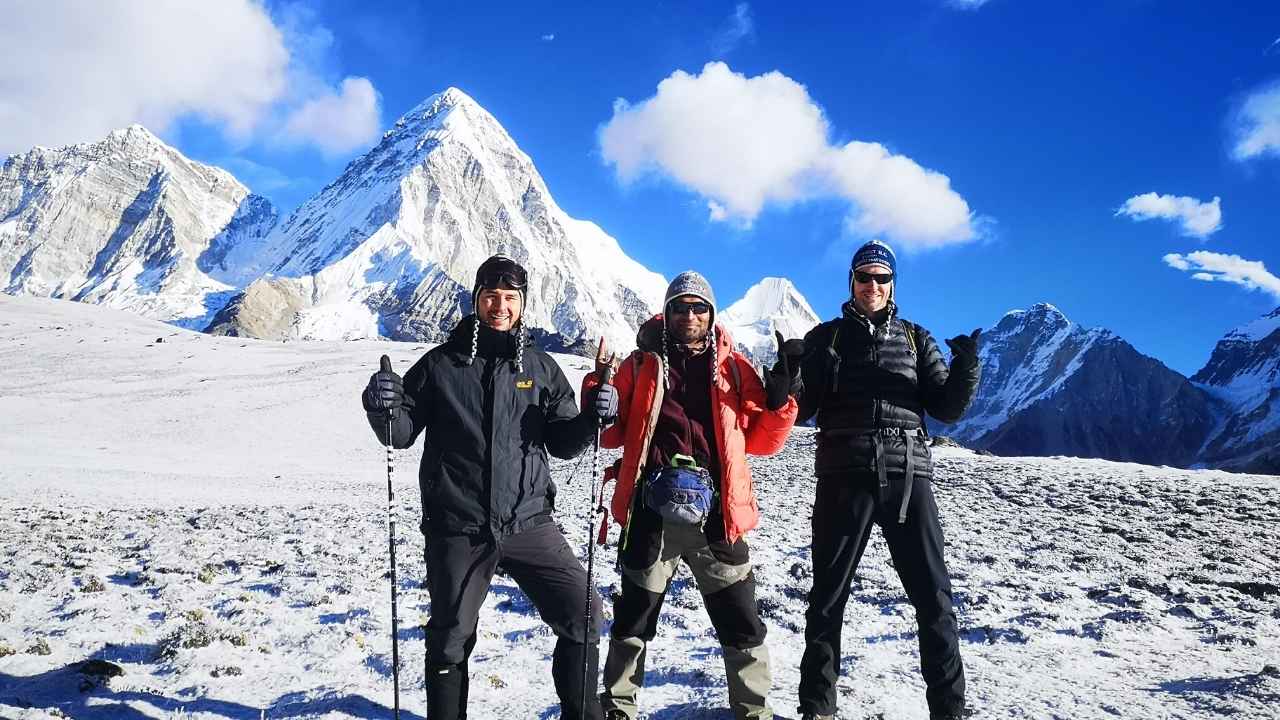
Leave Gorak Shep early and climb Kala Patthar while the mountains are catching the first light. Everest, Nuptse and Pumori stand out from the ridge.
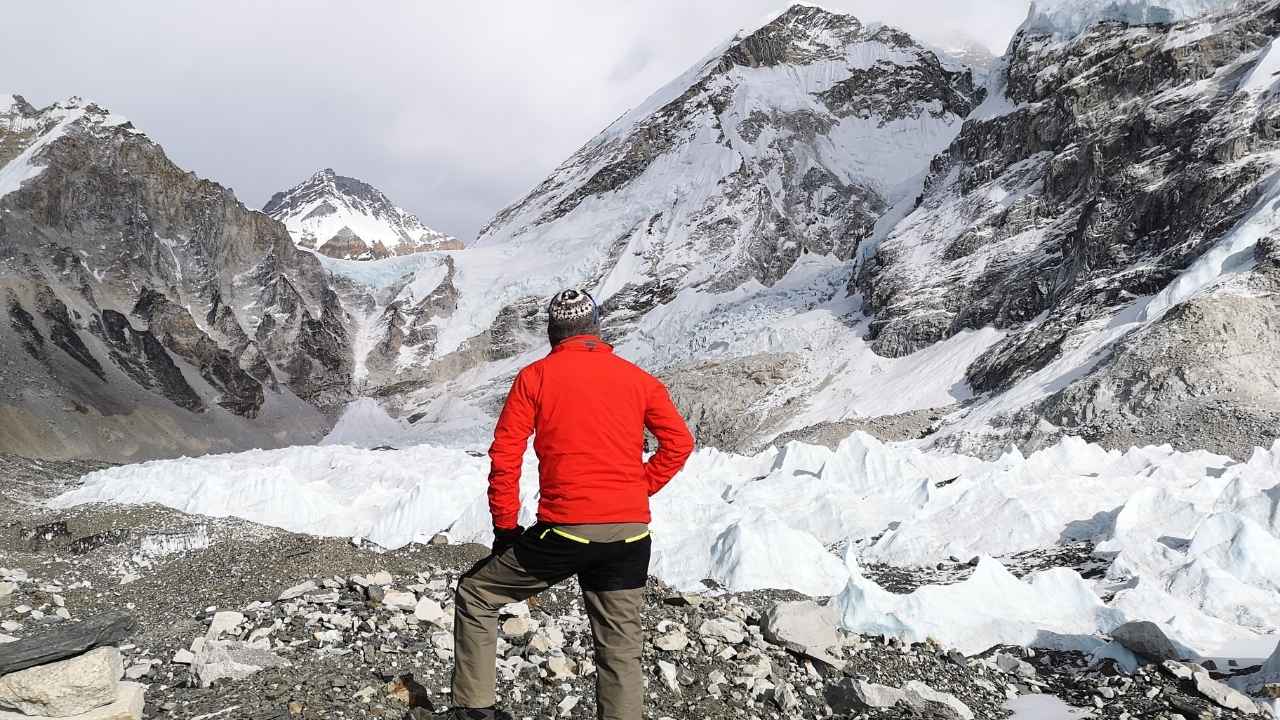
Walk across the rocky moraine to the foot of the Khumbu Icefall and reach the Base Camp used by climbers preparing for Everest.
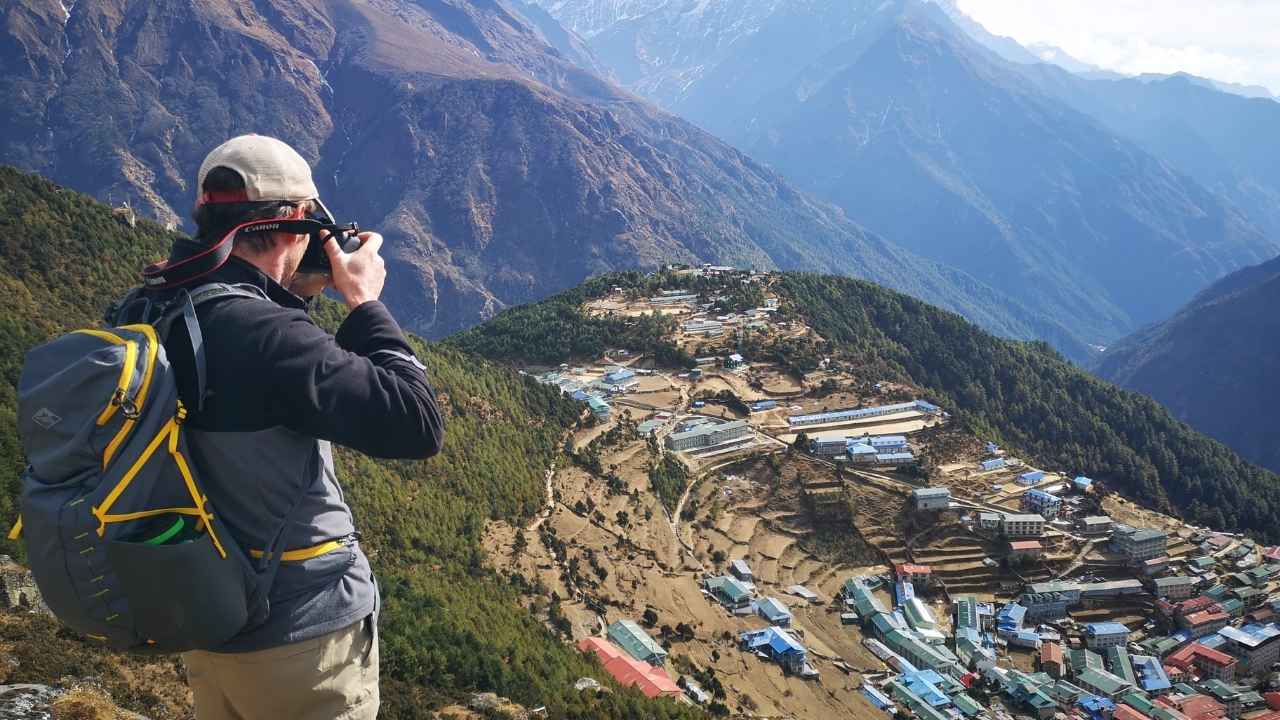
Namche is the main trading town in the Khumbu, built on a steep mountain slope with stone houses, lodges and shops spread across the town.
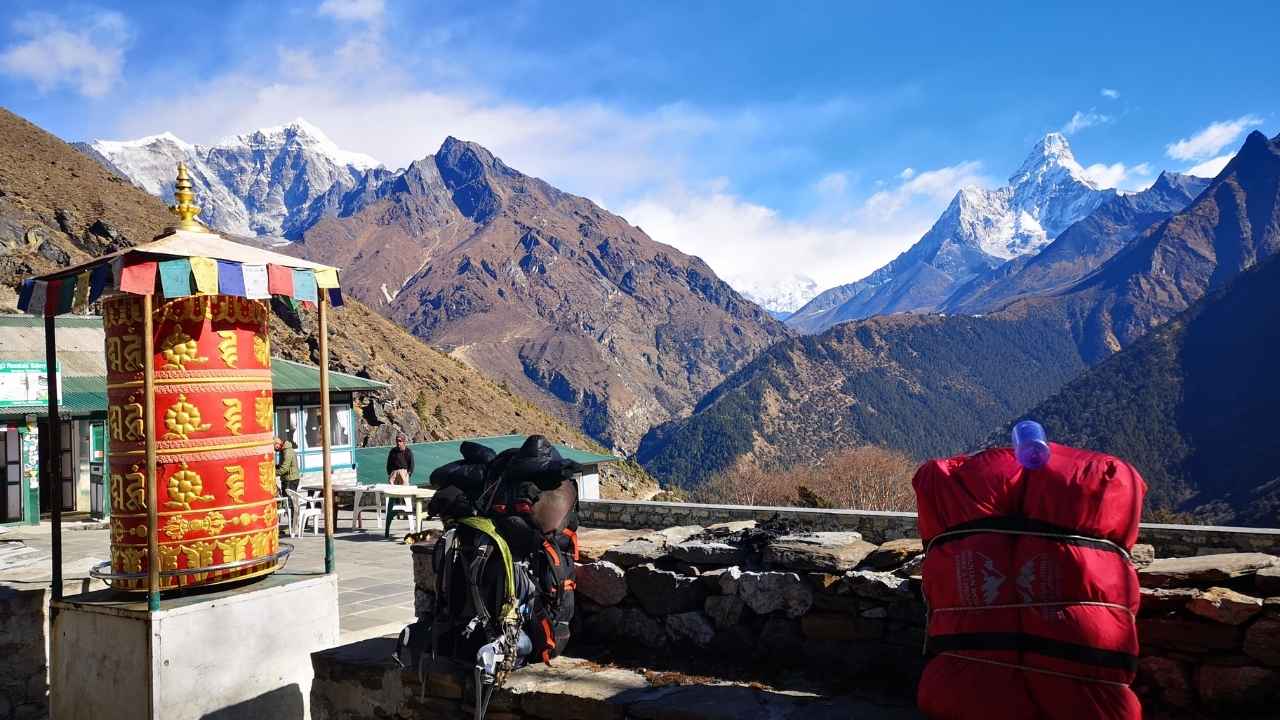
Pine and rhododendron forests give way to open valleys, stone-walled fields, bare slopes and glacial terrain as you move higher.
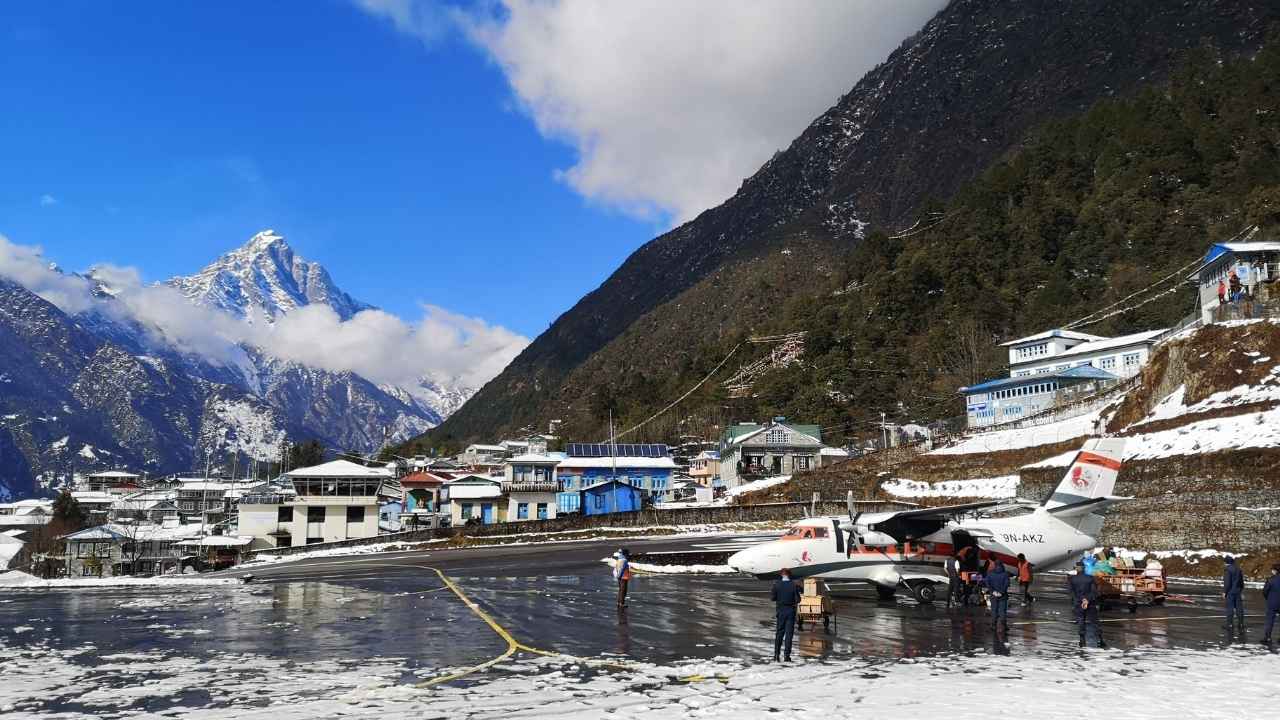
The flight to Lukla is the first part of the adventure, taking you into the Khumbu before you start walking toward Everest Base Camp.

After the trek, the helicopter takes you out from Gorak Shep, giving you a final view of the glaciers, valleys and ridges before leaving the Everest region.
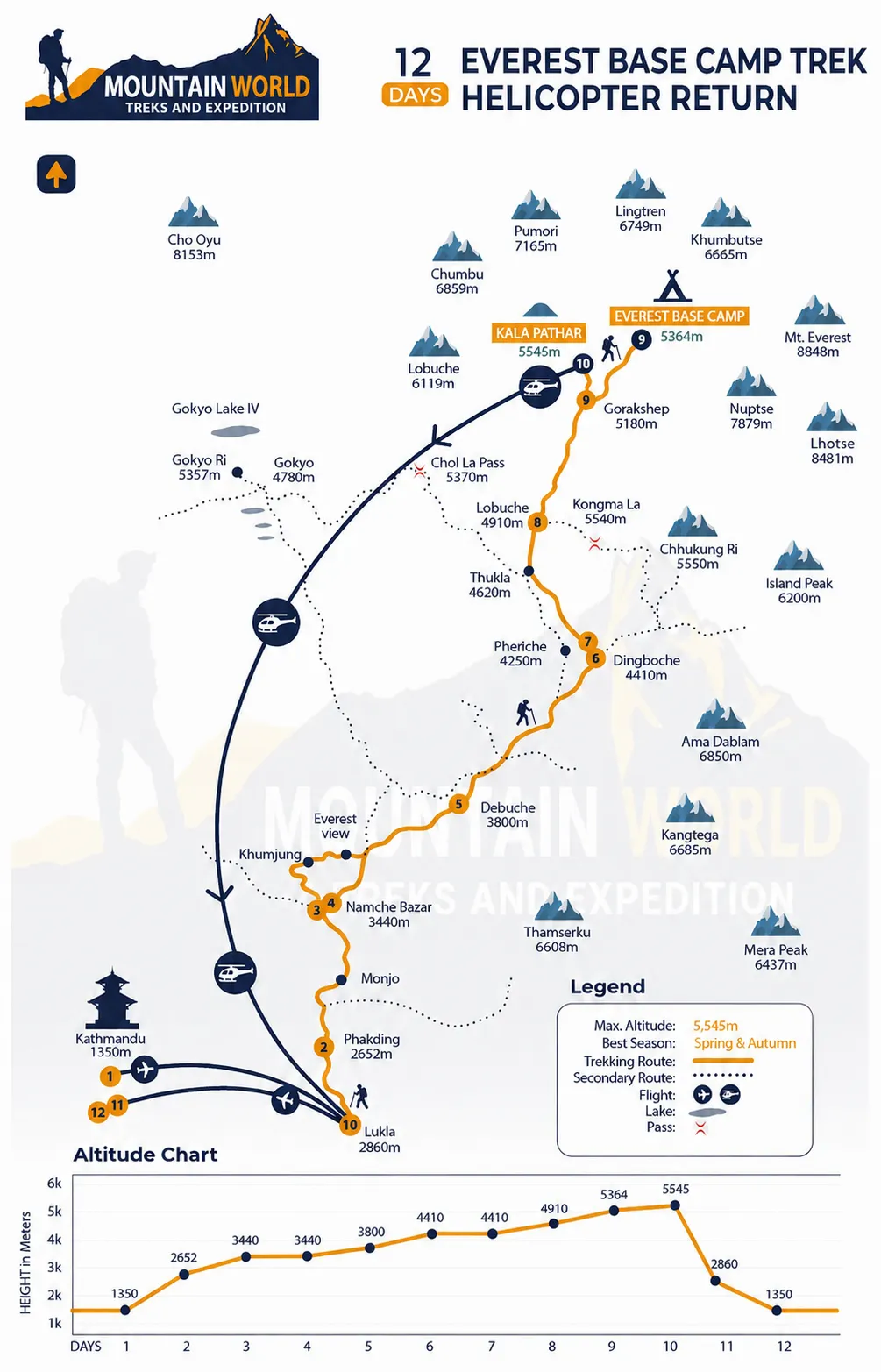
This 12-day trek starts in Kathmandu and follows the Khumbu trail through Lukla, Namche, Deboche, Dingboche, Lobuche and Gorak Shep to Everest Base Camp. After reaching Base Camp, you climb Kala Patthar at 5,545 m before taking a helicopter from Gorak Shep to Lukla rather than retracing the trail on foot. The itinerary outlines each day’s route, altitude, overnight stop, lunch location, walking conditions, key mountain views, practical points, and the evening briefing for the following day. Distances & timings can vary with weather, trail conditions, group pace, & flight operations, & your guide will confirm any changes during the briefing.
The 12-day Everest Base Camp Trek with Helicopter Return costs USD 1,999 per person. The trek is private, while the helicopter return is shared. The price includes Kathmandu hotel stay, Kathmandu-Lukla flights, helicopter return to Lukla, trekking permits, teahouse accommodation, three meals a day, licensed guide and porter, airport transfers, taxes and service charges.
Trek with like-minded adventurers. Departures every spring and autumn season.
12-day package, your own dates and pace. Licensed guide, Helicopter cost and porter for your group.
Add luxury lodges, extension treks, or Kathmandu sightseeing tours
From your first inquiry to your arrival in Nepal, we handle the key arrangements for your Everest Base Camp Trek with Helicopter Return, including trip confirmation, permits, accommodation, domestic flights, guide and porter arrangements, and helicopter coordination.
Send us your travel dates, number of trekkers, and any specific requirements. You can use our inquiry form, WhatsApp, or email to start the conversation.
We’ll prepare the itinerary and cost based on your travel dates and group size and send them to you. You can review everything before making your decision.
When you decide to go ahead, complete the required deposit payment. We’ll confirm your booking and keep your reservation details on record.
Before you arrive, we’ll share everything you need for the trek, including packing guidance, travel arrangements, flight details, and pre-trek guidance.
Important: Travel insurance is not included. Your policy must cover high-altitude trekking to at least 6,000 m and emergency helicopter evacuation.
If you want to reach Everest Base Camp on foot and spend time in the Khumbu along the way, this trek may suit you. You don't need previous high-altitude trekking experience. You should be prepared for several hours of walking each day, consecutive trekking days...
You’ll spend the trekking nights in local teahouses along the Everest Base Camp route, with mostly twin-sharing rooms. Bathrooms are shared, and facilities become simpler at higher elevations. In Kathmandu, you’ll stay in a hotel with a private room. Your teahouse stays are the same as the standard trek. The helicopter only affects how you leave the Khumbu, not where you sleep on the way up. For more details, see our Everest Base Camp Trek Accommodation Guide.
Teahouses prepare breakfast, lunch, and dinner throughout the trek. Meals include Nepali dishes such as dal bhat and momo, along with noodles, pasta, pizza, rice, potatoes, soup, eggs, pancakes, and bread. You can also buy drinks and snacks along the route. For more details, see our Everest Base Camp Trek Food & Drinks Guide.
Pack for cold mornings, changing weather, and long days at high altitude. Bring warm layers, a waterproof jacket, sturdy trekking boots, a sleeping bag, sunglasses, sunscreen, personal medication, trekking poles, and a water bottle. Keep daily items in your daypack and your main gear in the trekking duffel.
You won’t need any special gear for the flight out. Pack as you would for the standard trek and keep your daypack light since you’re carrying it the whole way up. For the full checklist, see our Everest Base Camp Trek Packing List, covering clothing, footwear, sleeping gear, toiletries, electronics, and travel documents.

Moderate to challenging. The trek does not involve technical climbing, but you need to walk to Everest Base Camp at 5,364 m. The altitude is the hardest part for most trekkers. Before reaching Base Camp, you will also deal with rocky paths, stone steps, uphill climbs, and long descents.
What You Will Deal With:
For more information about altitude and trail conditions, see our Everest Base Camp Trek Difficulty Guide.
If you can walk for several hours, manage uphill and downhill trails, and walk several days in a row, you can prepare for this trek. You do not need previous mountaineering experience, but regular walking before the trek will make the days in the Khumbu much easier.
Getting Ready for the Trek:
For a detailed training plan and altitude preparation, see our Complete Trek Fitness & Training Guide.
For the Everest Base Camp Trek with Helicopter Return, we usually recommend March to May and late September to November. These months normally bring better walking conditions and fewer weather issues for the return flight. Spring and autumn are also the busiest periods on the trail. For a month-by-month look at weather and trail conditions, see our Best Season for Everest Base Camp Guide.
Spring brings warmer days to the lower trail, with rhododendrons flowering around the hills. The higher sections are generally suitable for trekking, although April and May are busy with trekkers and climbing groups.
June to August is monsoon season. Rain and cloud are more common, and helicopter flights can be delayed or affected by poor visibility. The trail is quieter, but flight conditions need more flexibility.
Late September to November is the most popular period for the trek. October usually offers the clearest mountain views and more reliable weather, while November brings colder mornings and nights.
December to February is cold, especially around Gorak Shep. Snow can affect the higher trail, but clear winter mornings can bring excellent mountain views. The helicopter return avoids the long descent.
Not sure whether to walk both ways or return by helicopter? Compare the key differences between the standard Everest Base Camp Trek and the Everest Base Camp Helicopter Return Trek.
| Feature | Everest Base Camp Trek with Helicopter Return |12 Days Plan | Everest Base Camp Trek | 14 Days itinerary, Cost & Best Time |
|---|---|---|
| Duration | 12 Days | 14 Days |
| Highest Point | 5,545 m | 5,545 m |
| Difficulty | Challenging | Challenging |
| Best For | Full trekking experience & more time in the Khumbu | Reaching Everest Base Camp with a shorter return |
| Mountain Highlights | Everest, Lhotse, Nuptse, Ama Dablam | Everest, Lhotse, Nuptse, Ama Dablam |
| Landscape | High-altitude valleys, glaciers & rugged terrain | High-altitude valleys, glaciers & rugged terrain |
| Culture | Sherpa & Tibetan Buddhist culture | Sherpa & Tibetan Buddhist culture |
| Crowds | Higher on the main trekking route | Similar during the trekking section |
| Trek Experience | Experience Longer, more demanding, with a full return journey on foot | Shorter walking itinerary with the long descent replaced by a helicopter flight |
These guides cover the practical side of the Everest Base Camp Trek with Helicopter Return, from getting ready at home to making decisions on the trail. The helicopter return brings its own questions around weather, timing, and logistics that don’t come up on the standard trek. We’ve broken the trip down into focused guides covering fitness, paperwork, flights, costs, culture, and other practical details. Whether you’re trekking solo, as a couple, or with family, you’ll find trek-specific information to help you prepare for each stage of the journey.
At high altitude, there is less oxygen in the air, and your body needs time to adjust. You reach 5,364 m at Everest Base Camp, so altitude can affect even fit trekkers. Headache, nausea, dizziness, tiredness, loss of appetite, and poor sleep are common signs. Follow the acclimatization plan, walk at a steady pace, and tell your guide if you feel unwell. If symptoms worsen, do not climb higher. Descend and let your guide assess you. Flying out at the end doesn't lower your altitude risk going in. The same acclimatization days and pacing still apply on the way to Base Camp.
In an emergency: Your guide will assess the situation and arrange the next steps, including evacuation if needed. If you require medical treatment, our team can also help coordinate your return to Kathmandu and assist with reaching a suitable hospital or clinic.
For practical advice on altitude sickness, including early signs, prevention, and what to do when symptoms appear, see our Everest Base Camp Helicopter return Trek Altitude Sickness Guide.
Andrew
Singapore
Michael Lim
Singapore
James Tan
Singapore
Get clear answers about the Everest Base Camp Trek with Helicopter Return, including trek difficulty, altitude, acclimatization, Lukla flights, helicopter return, permits, accommodation, meals, costs, packing, safety, and what to expect along the route.
Still have questions? Our team responds within 24 hours.
[email protected]
Registered tourism company

Trekking Agencies Association

Authorised tour operator

Nepal Mountaineering Association
Certificate of excellence

International travelers
Everest Base Camp Trek with Helicopter Return |12 Days Plan . 12 Days