
Adventure of a lifetime
Fatin
Malaysia
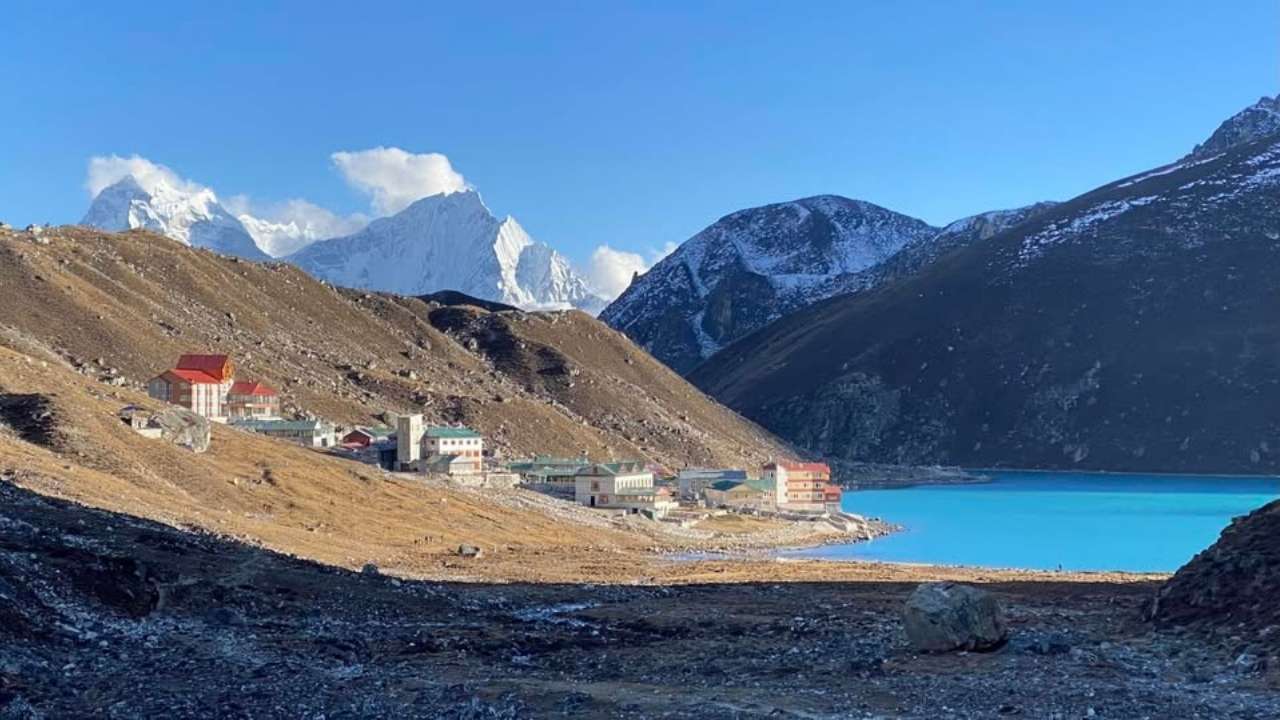
Everest Base Camp and Gokyo Lakes Trek: Reach Everest Base Camp, cross Cho La Pass, and discover the turquoise lakes of Gokyo.
The Everest Base Camp and Gokyo Lake Trek is a 17-day adventure in Nepal, including 14 days of trekking through the Khumbu region. The route takes you to Everest Base Camp (5,364 m), Kala Patthar (5,545 m), Cho La Pass (5,420 m), and Gokyo Ri (5,357 m), with time to explore the turquoise Gokyo Lakes and surrounding Himalayan scenery.
If you have extra time beyond the standard Everest Base Camp trek, adding Gokyo Lake gives you a more varied journey. You still reach Everest Base Camp, but instead of following the same trail back, you cross into a different valley, see the Ngozumpa Glacier, and experience a quieter side of the Khumbu.
The trek starts with a mountain flight to Lukla and follows the main trail through Phakding, Namche Bazaar, Tengboche, Dingboche, Lobuche, and Gorak Shep. After Everest Base Camp and Kala Patthar, you return toward Dzongla before crossing Cho La Pass. The route then continues through Gokyo, Machhermo, Dole, and Namche Bazaar before reaching Lukla.
The Gokyo section offers a different mountain experience from the Everest Base Camp trail. The route passes along the Ngozumpa Glacier and the Gokyo Lakes, while Gokyo Ri provides a wide Himalayan viewpoint. On a clear morning, you can see Everest, Lhotse, Makalu, and Cho Oyu from the summit.
The trek takes place inside Sagarmatha National Park. You need a Sagarmatha National Park Entry Permit and a Khumbu Pasang Lhamu Rural Municipality Entry Permit. We arrange both permits before the trek. No climbing permit is required because this is a trekking route.
The itinerary includes acclimatisation days in Namche Bazaar and Dingboche before the higher sections of the route. Most trekking days involve 5–7 hours of walking, while the climbs to Kala Patthar and Gokyo Ri and the Cho La crossing can require longer days.
The result is a complete Khumbu journey that combines the classic Everest Base Camp trail with the glaciers, lakes, valleys, and mountain views of the Gokyo region.

Ready to go?
Download Day-by-Day Itinerary
You can reach the Everest region by air from Kathmandu or Ramechhap, depending on the season. During peak trekking months, flights usually operate from Ramechhap, which requires a drive from Kathmandu before your flight. The flight to Lukla takes around 15–20 minutes from Ramechhap and about 30–35 minutes from Kathmandu. Mountain weather can cause delays or cancellations, so flight times may change. Our [Lukla Flight Guide] covers airport arrangements, baggage limits, flight schedules, and what to expect on your travel day.
Road Option
If you prefer to travel by road, a 2-day drive from Kathmandu takes you to Surke, a village below Lukla. From Surke, you can begin trekking toward Phakding and connect with the main Everest trail. The road journey takes longer than flying but avoids the Lukla flight and gives you a different way to enter the Everest region.
Total Distance
Walking Days
Accommodation
Meals
Transportation
Group Size
Guide
Porter
Best Season
Fitness Level
Permit
Trip Style
Starts
Ends

If you want to see more than Everest Base Camp, this trek takes you to Base Camp, across Cho La Pass, and into the Gokyo Valley. It is longer and harder than the standard Base Camp trek, but you get to see a much larger part of the Khumbu.
Many trekkers choose either Everest Base Camp or Gokyo Lakes. This trek combines both. You reach Base Camp first, cross Cho La Pass, and continue into the Gokyo Valley.
Cho La Pass stands at 5,420 m and is one of the harder sections of the trek. The trail can be steep and rocky, with snow and ice on the pass depending on the season. Good preparation and a steady pace are important here.
The Gokyo Valley is different from the Base Camp trail. Its turquoise lakes, Ngozumpa Glacier, and surrounding peaks give you a different view of the Khumbu. From Gokyo and Gokyo Ri, you can see Everest, Lhotse, Makalu, Cho Oyu, and other peaks.
You spend more time walking through the Khumbu on this trek. You pass Sherpa villages, stay in local teahouses, cross Cho La, and experience the quieter Gokyo side after reaching Everest Base Camp.
When you choose a company for the Everest Base Camp and Gokyo Lakes Trek, you want guides who know the route well. You are trusting them with your safety, your time, and your days at high altitude. This trek takes you through long walking days, Everest Base Camp, Gokyo Lakes, and Cho La Pass. I started my trekking career as a porter in 1996 and became a guide before founding Mountain World Treks in 2010. I still guide trekkers today, and I know how much difference the right guide can make to your trek in the Himalayas.
Started as a Trekking Porter
Became a Licensed Guide
Founded Mountain World Treks
Still Actively Guiding Treks in Nepal
Years from Porter to Founder
Our TripAdvisor ranking comes from trekkers who travelled with us. Their reviews reflect what guests actually experienced with our guides, from the first day on the trail to the end of their trek
Saligram cannot lead every trek, so he trains the guides who work with Mountain World Treks. Sudip, Niraj, Ishwor, Bipin, Dinesh, Suresh, Sital, Tek, and Ramesh have all learned from him.
Not sure about your fitness, pace, or altitude? Ask us before booking. We would rather explain the trek honestly, including the difficult parts, than promise an easy trip just to secure your booking.
We normally keep groups between 1 and 12 trekkers. Smaller groups help guides look after everyone's pace, notice problems early, and change the plan when needed.
Every guide carries a pulse oximeter and first-aid kit. From Namche onward, we watch how everyone is coping with altitude and adjust the pace, rest stops, or plan when necessary.
Saligram started as a porter, carrying other people's loads. That experience still shapes how we work today. Our porters receive fair pay, reasonable loads, and medical support throughout the trek.
Choose this trek if you want Everest Base Camp and Gokyo Lake trek in one journey, with Sherpa villages, Buddhist monasteries, the Ngozumpa Glacier, and Cho La Pass at 5,420 m along the way.
It suits trekkers who are comfortable with basic teahouses, remote mountain conditions, changing weather, and high-altitude trails. If this is your first Himalayan trek, the Everest Base Camp Trek for Beginners guide covers what to consider before choosing this route.
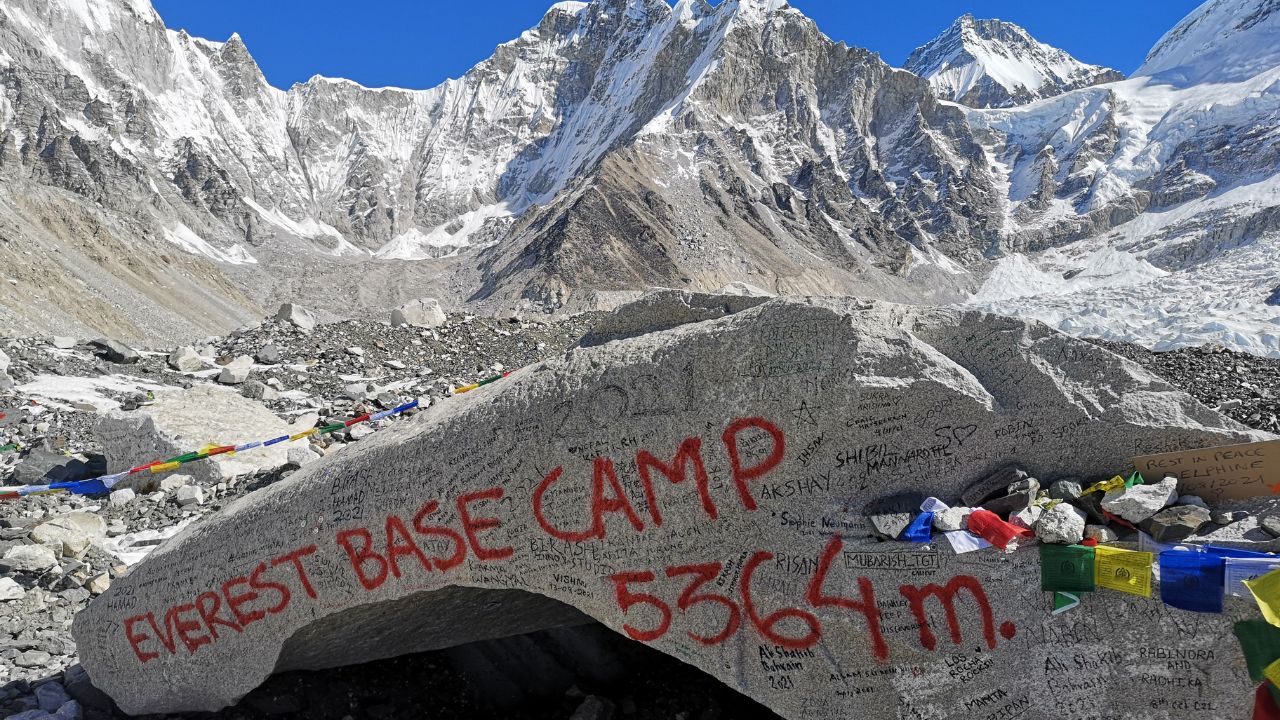
Stand at the foot of the world's highest mountain after trekking through the Khumbu.

Take on one of the highest and most demanding sections of the trek.
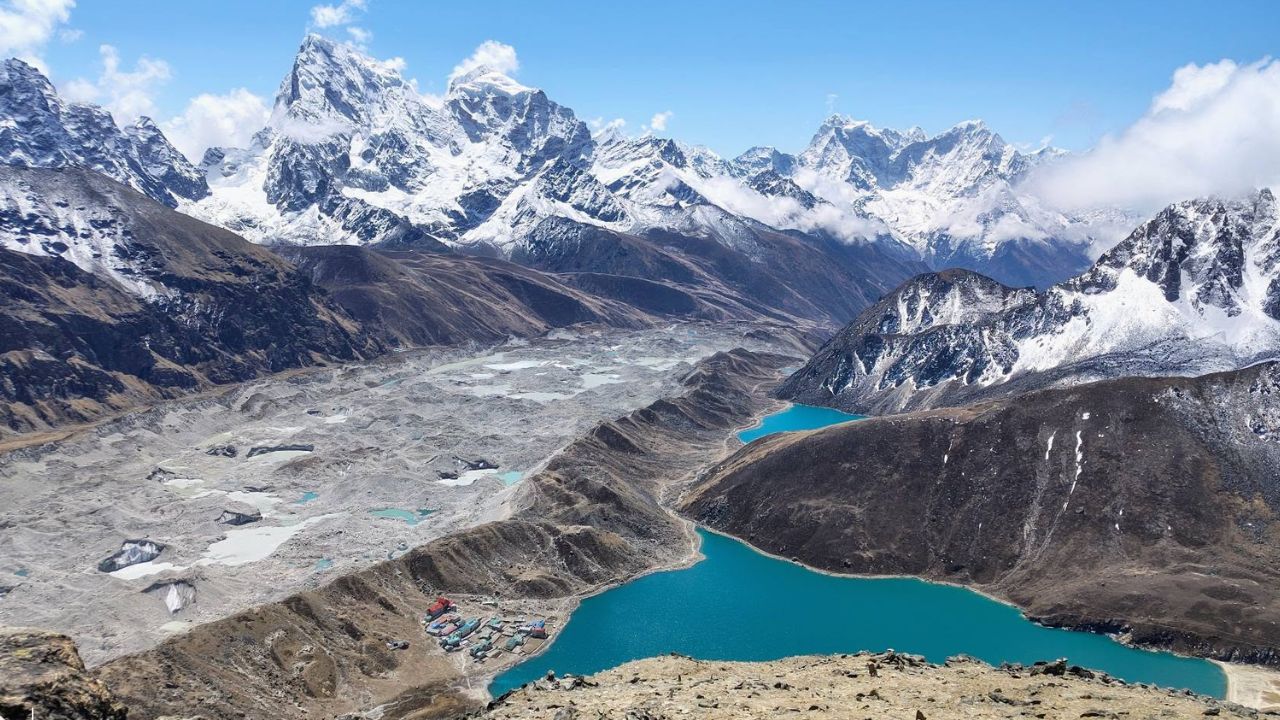
See the turquoise lakes surrounded by the high peaks of the Gokyo Valley
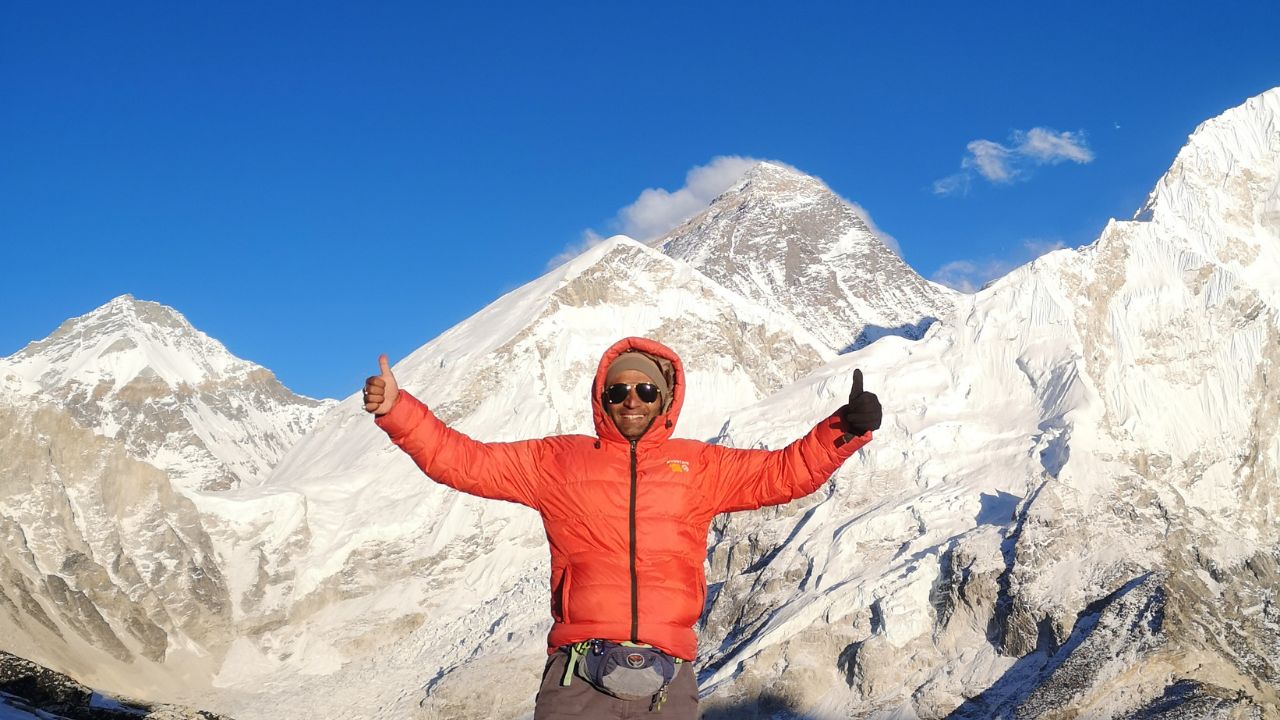
Get wide views of Everest, Lhotse, Nuptse, Pumori, and the surrounding mountains.

Walk through Khumbu villages and visit Buddhist monasteries along the trail.
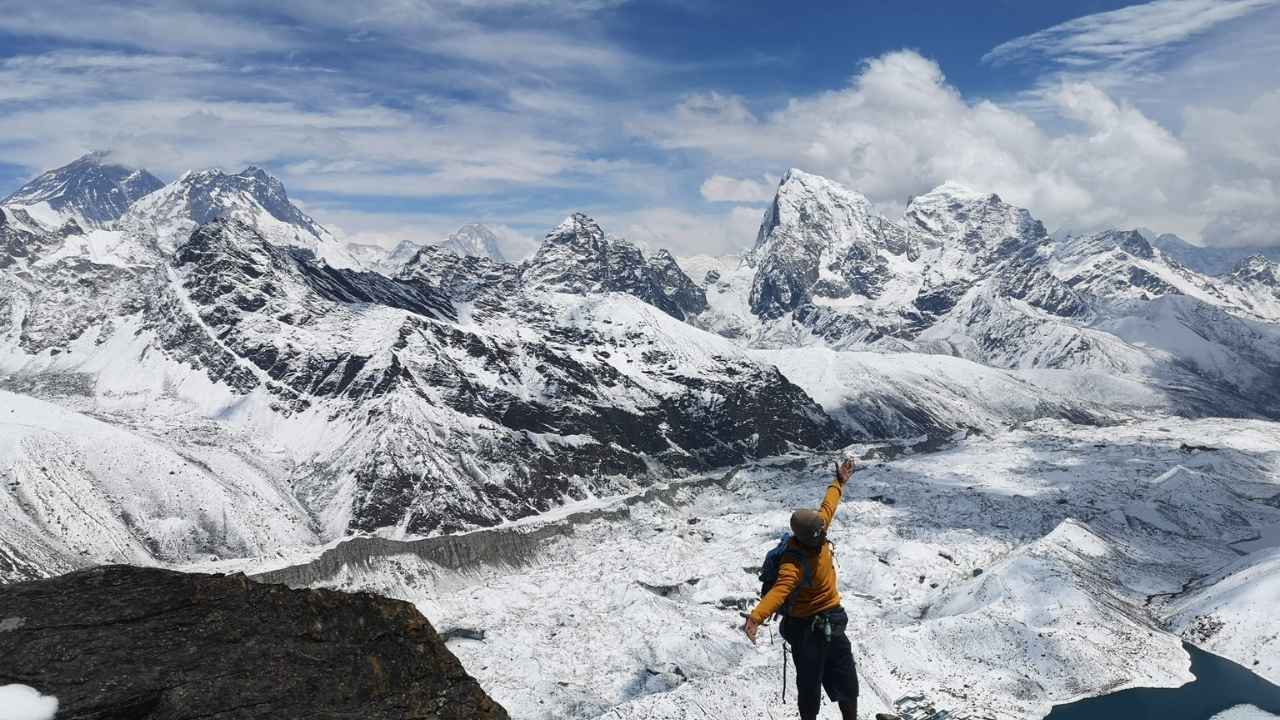
Look across the glacier toward Cho Oyu, Makalu, Everest, and Ama Dablam.

This is the exact 17-day itinerary I follow on every Everest Base Camp with Gokyo Lakes trek I run. Starting in Kathmandu, we fly to Lukla and trek through Namche Bazaar, Dingboche, and Lobuche to reach Everest Base Camp and Kala Patthar, then cross Cho La Pass to visit Gokyo Lakes before returning to Namche Bazaar, Lukla, and Kathmandu. Below, you’ll find the daily itinerary, overnight elevations, walking times, and practical advice based on my years leading treks in the Khumbu region.
The 17-day Everest Base Camp and Gokyo Lakes Trek costs USD 1,599 per person. The price includes Kathmandu hotel stays before and after the trek, Kathmandu–Lukla–Kathmandu flights, Sagarmatha National Park and Khumbu Pasang Lhamu Rural Municipality permits, teahouse accommodation, three meals a day during the trek, a licensed guide and porter, airport transfers, taxes, and service charges.
Trek with like-minded adventurers. Departures every spring and autumn season.
17-day package, your own dates and pace. Licensed guide and porter for your group.
Add helicopter returns, luxury lodges, or Kathmandu sightseeing tour
From your first inquiry to the start of your Everest Base Camp and Gokyo Lake Trek, we handle the key arrangements step by step.
Tell us your preferred dates, group size, and trekking plans.
We’ll send your route, itinerary, price, and answers to your questions.
Pay the required deposit to confirm your trek and receive your booking details.
We’ll send packing advice and essential information before you arrive.
Important: Travel insurance is not included in the package. Before your trek, you must purchase a policy that covers high-altitude trekking up to at least 6,000 m and emergency helicopter evacuation.
If reaching Everest Base Camp is something you genuinely want to experience, this trek can be a great choice. The journey takes you into the heart of the Khumbu, where you experience Sherpa villages, mountain culture, and life in the Himalayas along the way. The...
Teahouses provide basic rooms and shared bathrooms throughout the Khumbu. Facilities become simpler at higher elevations, while Kathmandu accommodation is in a private hotel room. Our Everest Base Camp and Gokyo Lake Trek Accommodation Guide covers what to expect along the route.
Teahouses and lodges serve Nepali and Western meals along the route. Choices become more limited at higher elevations. Our Everest Base Camp & Gokyo Lake Trek Food & Drinks Guide covers meals and drinks along the trek.
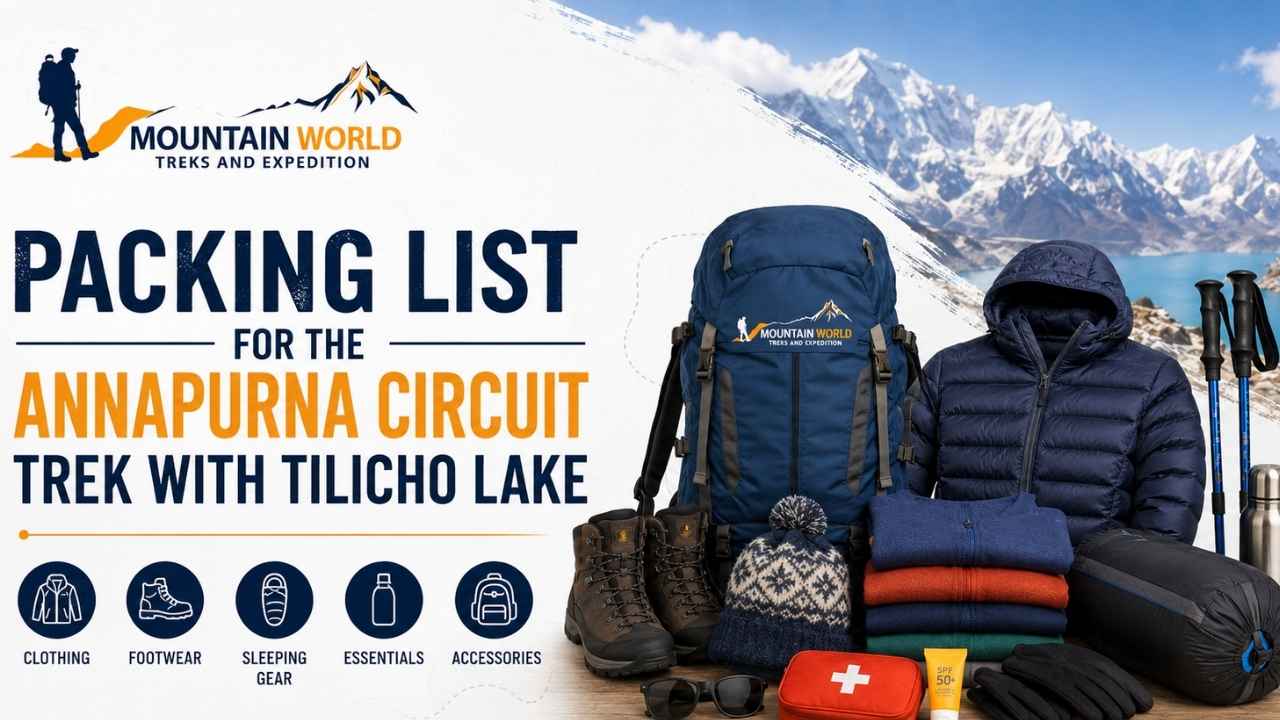
Pack for changing weather, cold mornings, and high-altitude conditions. Bring warm layers, a waterproof jacket, sturdy trekking boots, a sleeping bag, sunglasses, sunscreen, personal medication, trekking poles, and a reusable water bottle. Keep your main gear in a duffel bag and daily essentials in your daypack.
Our Everest Base Camp & Gokyo Lake Trek Packing List covers clothing, footwear, sleeping gear, toiletries, electronics, and travel documents.
Challenging. This trek is harder than the standard Everest Base Camp route because it adds Cho La Pass and more time at high altitude. You need to be comfortable with long walking days, steep sections, rocky trails, and crossing a high mountain pass.
What Makes This Trek Challenging?
You do not need to be an athlete or an experienced climber. You should be able to walk for several hours, handle uphill and downhill sections, and keep walking on consecutive days. Regular walking, hills, stairs, and longer hikes are good preparation before the trek.
You’re Ready for This Trek If You…
For a detailed training plan, see our Complete Trek Fitness & Training Guide.
For this trek, weather around Cho La Pass is especially important. The best periods are March to May and late September to November, when the pass is usually easier to cross and the higher trails are in better condition. Autumn is generally the most reliable, while spring brings warmer days and fewer trekkers early in the season. Summer is wetter, and winter can bring snow and ice around Cho La.
Autumn is the safest choice for the full EBC and Gokyo route. October usually has dry trails, clear mornings, and good views across the high valleys. November is colder, but the skies are often clear.
March to May brings warmer weather as the season moves on. March can still be cold around Cho La, while April and May usually have better conditions on the higher trail.
Winter brings the coldest conditions of the year. Snow and ice can cover parts of Cho La, making the crossing harder. Nights in Gokyo and other high villages can be extremely cold.
June to August is the monsoon period. The Everest region receives less rain than many parts of Nepal, but clouds can block the mountain views and flights to Lukla are more likely to be delayed.
Classic Everest Base Camp or the longer route through Cho La and Gokyo? Compare both and see which trek fits you better.
| Feature | Everest Base Camp and Gokyo Lake Trek | 17 Days and Cost | Everest Base Camp Trek | 14 Days Itinerary, Cost & Best Time |
|---|---|---|
| Duration | 17 Days Days | 14 Days Days |
| Highest Point | Kala Patthar – 5,545 m / Cho La Pass – 5,420 m / Gokyo Ri 5,357 m | Kala Patthar – 5,545 m |
| Difficulty | More Challenging | Challenging |
| Best For | A longer trek for those wanting Base Camp, Cho La Pass, and Gokyo Lakes | First-time Everest trekkers & classic EBC experience |
| Mountain Highlights | Everest, Lhotse, Nuptse, Ama Dablam, Cho Oyu | Everest, Lhotse, Nuptse, Ama Dablam |
| Landscape | High valleys, glaciers, lakes, rocky trails & Cho La Pass | High valleys, glaciers, rocky trails & mountain villages |
| Culture | Sherpa villages & Tibetan Buddhist culture | Sherpa villages & Tibetan Buddhist culture |
| Crowds | Less crowded on the Gokyo section | Higher on the main EBC trail |
| Trek Experience | More varied route with Cho La Pass and Gokyo Lakes | Classic route focused on Everest Base Camp |
The trek reaches 5,545 m at Kala Patthar, 5,420 m at Cho La Pass, and 5,357 m at Gokyo Ri. These guides cover the practical details to check before your trek, including altitude, insurance, permits, flights, weather, Gokyo Lakes, Cho La Pass, and solo trekking.
Altitude sickness can occur as you climb higher, especially above 3,000 meters. Headache, nausea, dizziness, tiredness, and poor sleep are common early signs. Tell your guide if you feel unwell. If symptoms worsen, stop ascending and descend.
In an emergency: Your guide will assess the situation and arrange the next steps, including evacuation if needed. If medical treatment is required, our team can coordinate your return to Kathmandu and help arrange a suitable hospital or clinic.
For early signs, prevention, and what to do if symptoms appear, see our Everest Base Camp & Gokyo Lake Altitude Sickness Guide.
Fatin
Malaysia
Nobby Rinni
Bendigo, Australia
Ray
Malaysia

Registered tourism company

Trekking Agencies Association

Authorised tour operator

Nepal Mountaineering Association
Certificate of excellence

International travelers
Everest Base Camp and Gokyo Lake Trek | 17 Days and Cost . 17 Days